𝐖𝐚𝐭𝐞𝐫 𝐢𝐬 𝐧𝐨𝐭 𝐚 𝐬𝐞𝐜𝐭𝐨𝐫, 𝐈𝐭 𝐢𝐬 𝐚 𝐦𝐚𝐜𝐫𝐨 𝐜𝐫𝐢𝐭𝐢𝐜𝐚𝐥 𝐫𝐢𝐬𝐤
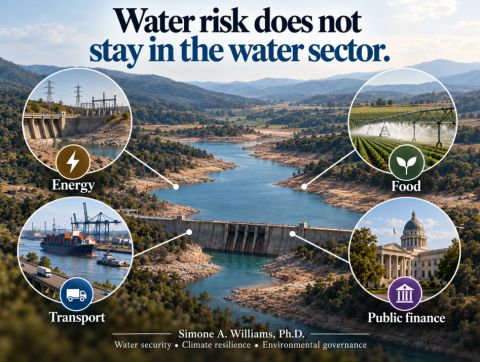
𝐖𝐚𝐭𝐞𝐫 𝐢𝐬 𝐧𝐨𝐭 𝐚 𝐬𝐞𝐜𝐭𝐨𝐫. 𝐈𝐭 𝐢𝐬 𝐚 𝐦𝐚𝐜𝐫𝐨 𝐜𝐫𝐢𝐭𝐢𝐜𝐚𝐥 𝐫𝐢𝐬𝐤.
Water is often treated as a standalone policy domain. But in many fragile and climate-exposed contexts, it functions less as a sector and more as a 𝐬𝐲𝐬𝐭𝐞𝐦 𝐰𝐢𝐝𝐞 𝐬𝐭𝐫𝐞𝐬𝐬 𝐦𝐮𝐥𝐭𝐢𝐩𝐥𝐢𝐞𝐫.
Water stress can be one of the 𝐞𝐚𝐫𝐥𝐢𝐞𝐬𝐭 𝐯𝐢𝐬𝐢𝐛𝐥𝐞 𝐬𝐢𝐠𝐧𝐚𝐥𝐬 𝐨𝐟 𝐛𝐫𝐨𝐚𝐝𝐞𝐫 𝐬𝐲𝐬𝐭𝐞𝐦𝐢𝐜 𝐬𝐭𝐫𝐚𝐢𝐧.
When groundwater declines, pumping costs rise and supply reliability can weaken.
When river flows fluctuate, food production and import needs can change.
When drainage systems fail, governments absorb the costs of disruption and recovery.
Water variability rarely stays in the “water sector.”
It moves across infrastructure systems, markets and public budgets.
When drought reduces hydropower output, energy costs and fuel imports can rise.
When floods disrupt transport corridors, trade, revenues and essential services are affected.
In these contexts, water risk can become an early warning of 𝐢𝐧𝐬𝐭𝐢𝐭𝐮𝐭𝐢𝐨𝐧𝐚𝐥 𝐚𝐧𝐝 𝐟𝐢𝐬𝐜𝐚𝐥 𝐬𝐭𝐫𝐚𝐢𝐧 — yet planning, financing and risk assessment still tend to remain siloed within environmental agencies or utilities.
If water-related shocks are compounding, then 𝐝𝐞𝐜𝐢𝐬𝐢𝐨𝐧 𝐫𝐮𝐥𝐞𝐬, 𝐞𝐚𝐫𝐥𝐲-𝐰𝐚𝐫𝐧𝐢𝐧𝐠 𝐬𝐲𝐬𝐭𝐞𝐦𝐬 𝐚𝐧𝐝 𝐜𝐨𝐧𝐭𝐢𝐧𝐠𝐞𝐧𝐭 𝐟𝐢𝐧𝐚𝐧𝐜𝐢𝐧𝐠 𝐦𝐞𝐜𝐡𝐚𝐧𝐢𝐬𝐦𝐬 need to reflect that reality.
Treating water risk as an upstream issue of public finance, infrastructure resilience and development strategy is no longer optional.
For development banks, UN agencies, finance ministries and infrastructure planners, the shift is clear:
𝐖𝐚𝐭𝐞𝐫 𝐠𝐨𝐯𝐞𝐫𝐧𝐚𝐧𝐜𝐞 𝐢𝐬 𝐧𝐨𝐭 𝐨𝐧𝐥𝐲 𝐞𝐧𝐯𝐢𝐫𝐨𝐧𝐦𝐞𝐧𝐭𝐚𝐥 𝐩𝐨𝐥𝐢𝐜𝐲. 𝐈𝐭 𝐢𝐬 𝐩𝐚𝐫𝐭 𝐨𝐟 𝐞𝐜𝐨𝐧𝐨𝐦𝐢𝐜 𝐫𝐞𝐬𝐢𝐥𝐢𝐞𝐧𝐜𝐞 𝐚𝐫𝐜𝐡𝐢𝐭𝐞𝐜𝐭𝐮𝐫𝐞.
Where are you seeing water risk treated as a fiscal or financial-stability concern rather than simply a “water sector” issue?