Infographics: urbanisation and urban development in Indonesia
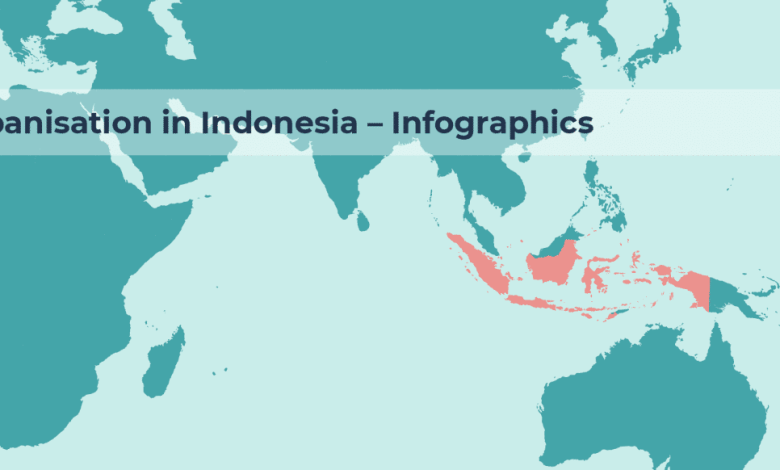
Indonesia’s cities are transforming at an unprecedented pace, reshaping the country’s social, economic, and environmental landscape. As the world’s largest island nation, Indonesia faces unique urban challenges balancing rapid development with sustainability, preserving its rich cultural heritage while embracing modernity, and safeguarding coastal cities against rising sea levels.
A Shifting Population: From Rural to Urban
For much of its history, Indonesia was a predominantly rural nation. Villages flourished, agriculture dominated, and urban life was a distant concept for many. That changed in the late 20th century. The 1980s marked the beginning of a rapid urban expansion, pulling millions into cities in search of opportunities. By 2011, history was made—Indonesia became an urban-majority nation, with city dwellers outnumbering their rural counterparts for the first time. And the shift isn’t stopping anytime soon. Projections indicate that urban populations will continue to rise in the coming decades, forever altering the fabric of Indonesian society.
Indonesia’s Expanding Cityscape
Indonesia is home to many large cities, each with its own distinct character. Thirteen cities already have populations between 1 and 5 million, serving as economic and cultural hubs. But Jakarta, the nation’s beating heart, stands in a league of its own. With nearly 11 million residents in 2018, no other city came close to its scale. Fast forward to 2030, and Jakarta is projected to swell beyond 12 million, still towering over the next largest urban areas, like Bekasi, which is expected to reach 4.3 million residents.
The Future of Urban Indonesia: Innovation or Crisis?
The stakes of urbanisation in Indonesia are immense. The government has made an ambitious move to develop a new capital, an endeavor projected to cost around $33 billion. This shift aims to relieve Jakarta’s congestion and mitigate the environmental risks facing the city.
Why is this necessary? Because Jakarta is sinking. Built on soft, flood-prone land and sitting just 8 meters above sea level, the city is on the front lines of climate change. When severe flooding hit in early 2020, water levels surged to 1.5 meters in the streets, disrupting lives and livelihoods. And as sea levels continue to rise, so does the urgency for sustainable urban planning.
A Nation of Islands, A Future of Cities
Indonesia’s geography is as diverse as its people. With 17,508 islands, the country is an archipelagic giant. However, its urban growth is concentrated on just a handful only eight islands house Indonesia’s 20 most populous urban areas. As cities expand, the challenge lies in ensuring that growth is equitable and environmentally sound.
Life in Indonesian Cities: The Pulse of Urban Living
Navigating Indonesian cities is no small feat. Traffic congestion is a daily struggle, with the average commuter spending a staggering 51 hours a year stuck on the road. Yet, amidst the chaos, Jakarta boasts a surprising feat—its bus system, spanning 250 kilometers, is the most extensive in the world. Public transport remains a vital part of urban life, a key player in shaping more sustainable mobility solutions.
Indonesia stands at a crossroads. Its cities are bursting with energy, innovation, and opportunity. But without strategic planning, the risks are just as vast congestion, climate vulnerabilities, and environmental degradation. The choices made today will define the future of this island nation, determining whether its urban transformation becomes a beacon of progress or a cautionary tale.
source :