The most carbon?
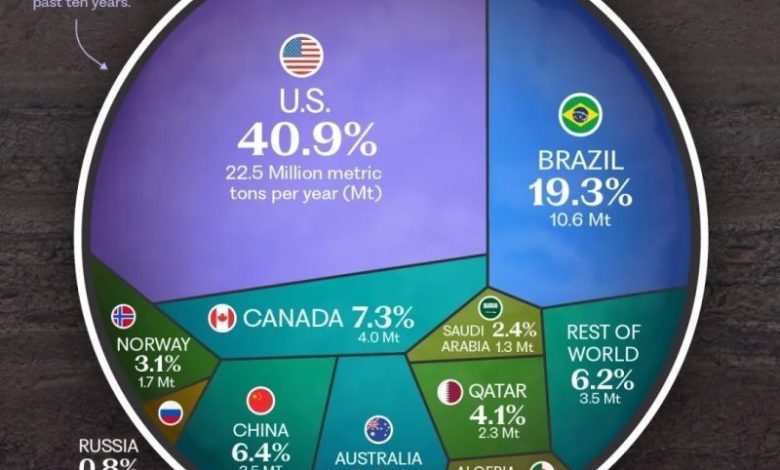
This infographic provides insights into which countries are leading in carbon capture and storage (CCS), a crucial technology for achieving net-zero emissions by 2050. Here are the key takeaways:
Global Leaders in Carbon Capture
The total carbon dioxide captured in 2023 reached 55 million metric tons (Mt), but to meet climate goals, this must grow to 1000 Mt by 2050. The top contributors are:
🔹 🇺🇸 United States (40.9%) – 22.5 Mt captured, with a rapid growth rate of 34% per year over the last two years. The U.S. is a clear frontrunner in CCS adoption.
🔹 🇧🇷 Brazil (19.3%) – 10.6 Mt captured, making it the second-largest carbon capturer. Given Brazil’s vast forests and bioenergy potential, CCS plays a key role in its decarbonization strategy.
🔹 🇦🇺 Australia (7.3%) – 4 Mt captured, positioning it as a significant player in CCS, largely due to its fossil fuel industry investments in carbon management.
🔹 🇨🇳 China (6.4%) – 3.5 Mt captured. Despite its high emissions, China is investing in CCS as part of its long-term climate strategy.
🔹 🇨🇦 Canada (7.3%) – 4 Mt captured, with CCS playing a role in its oil sands industry and emissions reduction plans.
Other contributors include Saudi Arabia (2.4%), Qatar (1.4%), Algeria (2.2%), and Russia (0.8%). The rest of the world accounts for 6.2% of total carbon capture.
🚀 The CCS Challenge & Future Growth
- Despite progress, carbon capture must expand nearly 20x to meet the 1.5°C climate target.
- Emerging economies need greater investment and technological support to scale CCS solutions.
- New policies, incentives, and infrastructure will be essential to accelerate adoption worldwide.
The Takeaway
Carbon capture alone won’t solve climate change, but it is a critical tool alongside renewable energy, nature-based solutions, and emissions reductions.
source :