
Business framework for climate adaption
Climate change is no longer a distant threat but a present reality that is already impacting businesses worldwide. From extreme weather events disrupting supply chains to rising temperatures affecting operations, the material risks are undeniable. To navigate this new landscape, companies need a structured and forward-looking approach to climate adaptation. This isn’t just about minimizing losses; it’s about seizing new opportunities and building a more resilient future.
Why Climate Adaptation is a Business Imperative
For far too long, climate action has been seen as a “nice-to-have” or a purely philanthropic endeavor. Today, it’s a critical component of business continuity, performance, and value creation. Ignoring climate risks can lead to significant financial losses, while proactive adaptation can unlock new revenue streams, drive efficiencies, and enhance a company’s reputation as a responsible corporate citizen. The urgency of action is clear: the future of your business depends on it.
The Three Pillars of a Comprehensive Adaptation Strategy
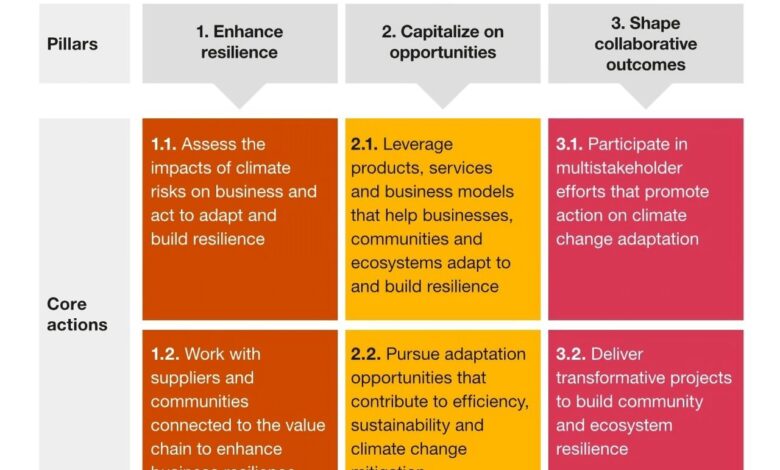
Moving from intention to impactful action requires a strategic framework. Companies can effectively organize their climate adaptation efforts around three interconnected pillars:
- Enhancing Resilience: This pillar focuses on fortifying your internal operations and value chain against climate impacts. It involves a deep dive into physical climate risks, using scenario planning to understand potential future conditions. You’ll need to strengthen your assets, infrastructure, and supply networks, perhaps by investing in more resilient materials or implementing robust supplier resilience programs. The goal is to build the capacity to withstand disruptions and bounce back quickly.
- Capitalizing on Opportunities: Climate change presents not only risks but also significant opportunities for innovation and growth. This pillar encourages companies to develop and market climate-resilient products and services. Think about new technologies that can help communities adapt, or solutions that offer both adaptation and mitigation co-benefits. By aligning your offerings with the evolving needs of a changing climate, you can tap into new markets and gain a distinct competitive advantage.
- Shaping Collaborative Outcomes: No single company can tackle the immense challenge of climate change alone. This pillar emphasizes the power of collective action. By forging partnerships with governments, NGOs, and local communities, businesses can contribute to large-scale adaptation initiatives that extend beyond their own operational boundaries. These collaborations drive systemic change, amplify impact, and build broader societal resilience, creating a more stable environment for everyone, including your business.
Making Adaptation a Core Business Function
To truly integrate climate adaptation, it needs to be more than just a standalone project; it must be embedded into the very fabric of your organization. This requires:
- Strategic Alignment: Your corporate strategy needs to be fully aligned with the latest climate science, ensuring that adaptation goals are central to your long-term vision.
- Integrated Governance: Embed climate risk analysis into your existing governance processes, making it a regular part of decision-making at every level.
- Transparent Disclosures: Practice credible and transparent reporting on your adaptation efforts. This builds trust with stakeholders and demonstrates accountability for your progress.
By putting these enabling structures in place, adaptation becomes measurable, accountable, and scalable, transforming it from an optional initiative into a fundamental driver of long-term stability and sustainable development. Climate adaptation is no longer a choice; it’s a critical lever for your company’s resilience, relevance, and long-term value.
source:


