
Impact of climate change on human health
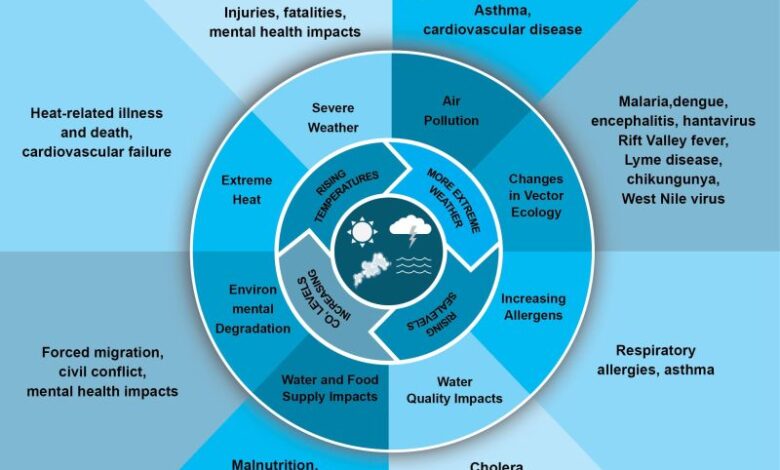
The Physiological Toll: Heat and Air
As the global thermostat rises, our internal cooling systems and respiratory health are pushed to their breaking point.
- The “Urban Heat Island” Effect: Cities trap heat, turning streets into ovens. This leads to a surge in heatstroke, renal (kidney) failure, and cardiovascular collapse, particularly in the elderly and those with pre-existing conditions.
- Respiratory Siege: Rising CO2 levels don’t just warm the air; they act as a fertilizer for weeds, creating longer, more intense allergy seasons. Simultaneously, wildfire smoke and fossil fuel combustion fill our lungs with PM2.5 (fine particulate matter), causing chronic asthma and systemic inflammation.
The Biological Shift: Pathogens on the Move
Climate change is redrawing the map of infectious diseases. Warmer winters and wetter summers allow “vectors” (carriers) to thrive in new territories.
- Vector-Borne Expansion: Mosquitoes carrying Malaria, Dengue, and Zika, and ticks carrying Lyme disease, are migrating toward the poles and higher altitudes, reaching populations with no prior immunity.
- Water-Borne Outbreaks: Intense flooding overwhelms sewage systems, while warming oceans trigger toxic algal blooms. This increases the risk of water-borne killers like Cholera and Cryptosporidiosis.
The Nutritional Crisis: From Scarcity to Quality
Climate change hits our bodies through the food we eat and the water we drink.
- Crop Devaluation: Increased atmospheric $CO_2$ can actually lower the nutritional density of staples like rice and wheat, reducing levels of zinc, iron, and protein.
- Supply Chain Volatility: Droughts and floods create “food deserts,” leading to acute malnutrition in developing regions and obesity/metabolic issues in developed areas where people turn to cheaper, ultra-processed shelf-stable foods.
The “Invisible” Impact: Mental Health & Displacement
The psychological weight of a changing planet is a growing crisis often referred to as Eco-Anxiety.
- Acute Trauma: Survivors of hurricanes and wildfires face high rates of PTSD, depression, and domestic violence in the aftermath of losing homes and livelihoods.
- Climate Migration: As coastal areas and farmlands become uninhabitable, millions are forced to move. This “environmental stress” leads to resource conflict and the loss of social support networks, which are critical for mental resilience.
Health as the Ultimate Argument for Action
We must pivot from viewing climate action as a “sacrifice” to seeing it as preventative medicine. The Lancet Countdown on Health and Climate Change states it clearly: Climate change is the greatest health threat of the 21st century, but tackling it is also our greatest global health opportunity. When we heal the earth, we heal ourselves.
source:


