Verra has Approved the First Carbon Credits Uunder its Rice Production Methodology
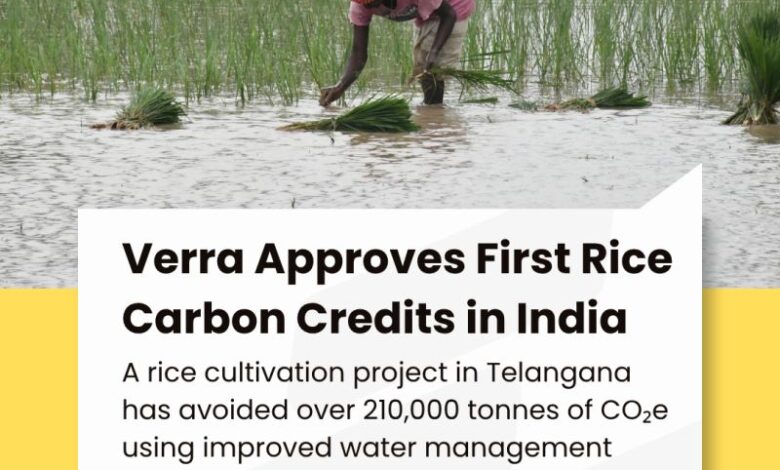
Verra has approved the first carbon credits under its rice production methodology. The project is based in India and focuses on reducing methane emissions from rice cultivation.
The Core Carbon Sustainable Rice Productions 01 project in Telangana has avoided more than 210,000 tonnes of CO₂ equivalent through improved water and crop management practices.
Here’s how it works:
→ Alternate wetting and drying (AWD): Farmers periodically allow rice fields to dry before irrigating them again, instead of keeping them continuously flooded.
→ Lower methane emissions: The practice introduces more oxygen into the soil, slowing the activity of microbes that produce methane.
→ Farmer support: The project provides water tubes, training and technical assistance. Farmers also receive a share of the revenue generated from carbon credit sales.
→ Verified methodology: The credits were issued under Verra’s VM0051 methodology, which supports the quantification of emission reductions from improved rice production practices.
Why does this matter?
Flooded rice cultivation is a significant source of agricultural methane emissions worldwide. Better water management offers a practical way to reduce these emissions while creating an additional revenue stream for participating farmers.
The methodology also supports other practices, including improved rice varieties and the use of methanotrophic bacteria to further reduce methane emissions.
With 13 other projects using VM0051 already under development or undergoing validation, this first approval could help expand the use of improved rice cultivation practices across multiple countries.
The key question now is how effectively these projects can scale while maintaining credible emissions measurement and delivering meaningful benefits to farmers.
Follow Carbon Market Network for more updates on carbon markets, carbon credit methodologies, and climate solutions.
Source: Verra