ABC of sustainable & inclusive urban development
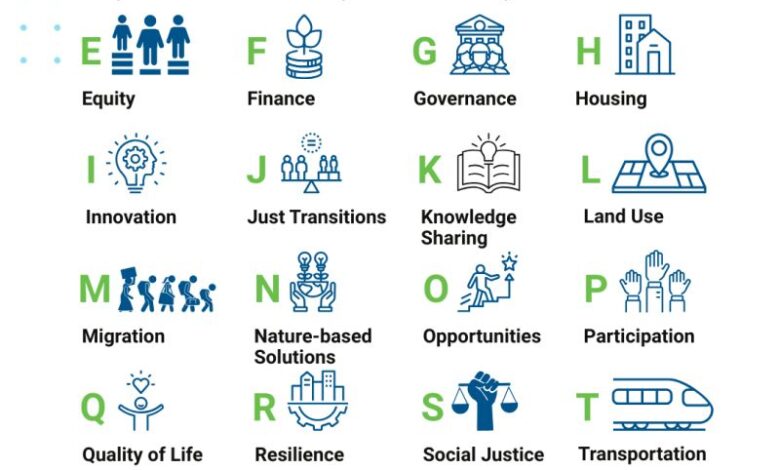
Building thriving urban centers in the 21st century extends far beyond the mere construction of roads and skyscrapers. At its heart, creating truly livable and sustainable cities is about people centered design understanding the dynamic needs, diverse experiences, and inherent vulnerabilities of the populations that call these metropolises home. While grand infrastructure projects often dominate the headlines, there are five often-overlooked yet utterly essential pieces of the urban puzzle, forming a spectrum from M to X, that truly define a city’s success and resilience:
M is for Migration: The Dynamic Pulse of Urban Growth
Cities have always been beacons of hope, magnets for individuals seeking safety, economic opportunity, and a better quality of life. The constant ebb and flow of people – migration – is not merely a demographic statistic; it’s the living, breathing pulse of urban evolution. To ignore these migration trends in urban planning is to invite a cascade of challenges: overcrowding that strains existing infrastructure, the proliferation of informal settlements lacking basic services, and a fundamental breakdown in social cohesion. An truly inclusive urban plan recognizes this inherent dynamism, actively making space for everyone who chooses to call the city home, ensuring access to resources and opportunities regardless of their origin story. It’s about building cities that welcome and integrate, rather than exclude and marginalize.
J is for Just Transitions: Climate Action with a Conscience
As the world pivots towards a greener, more sustainable economy, the imperative of a Just Transition becomes paramount. This isn’t just about reducing carbon footprints; it’s about ensuring that the shift to green industries and sustainable practices does not, in any way, come at the expense of the most vulnerable segments of society. Climate action, at its core, must be infused with compassion and equity. This means proactively addressing potential job losses in traditional industries, investing in retraining programs, and safeguarding livelihoods as we move away from fossil fuels. A just transition ensures that the benefits of a green future are shared by all, preventing the creation of new inequalities in the name of environmental progress.
P is for Participation: Empowering the Urban Voice
The best policies are not crafted in isolated boardrooms; they emerge from the lived experiences of the people they are designed to serve. Participation is the bedrock of genuinely effective urban governance. If we want better, more resonant policies, we must start by asking the people who live them. True participation means transcending tokenistic consultations and instead giving genuine voice and tangible power to diverse communities youth, women, elders, and marginalized groups throughout every stage of the decision-making process. When citizens are active co-creators of their urban environment, policies become more relevant, more equitable, and ultimately, more successful.
V is for Vulnerability Assessments: Mapping the Risks to Build Resilience
Before any meaningful solution can be implemented, the problem itself must be thoroughly understood and meticulously mapped. Vulnerability Assessments are the essential diagnostic tools for a smart, resilient city. Where are the areas most susceptible to flooding during heavy rains? Which neighborhoods are at the highest risk during an intense heatwave? Who among the population is most vulnerable to economic shocks or natural disasters? Smart cities leverage this critical vulnerability data to drive targeted, effective investments directing resources precisely where they are most needed to protect lives, livelihoods, and infrastructure, transforming potential weaknesses into fortified strengths.
X is for X-Factors: Embracing the Unpredictable in Urban Planning
Even the most meticulous plans can be upended by the unforeseen. X-Factors represent the unpredictable curveballs that life, and the world, can throw at our urban centers: sudden pandemics, disruptive supply chain shocks, or unanticipated climate disasters. This is where resilience thinking truly comes into its own. Cities must cultivate an inherent flexibility and readiness to adapt. It’s about designing systems and policies that can bend without breaking, preparing for a spectrum of contingencies, and fostering a culture of continuous learning and adaptation. Staying flexible and staying ready isn’t just a strategy; it’s the urban imperative for navigating an increasingly uncertain future.
Ultimately, every city, regardless of its size or global standing, grapples with its own unique weak spots and challenges. The path to building truly better cities lies in acknowledging these often-overlooked dimensions, embracing people-centered approaches, and proactively planning for a future that is as dynamic and unpredictable as urban life itself.
source: