
Carbon storage in Earth’s ecosystems
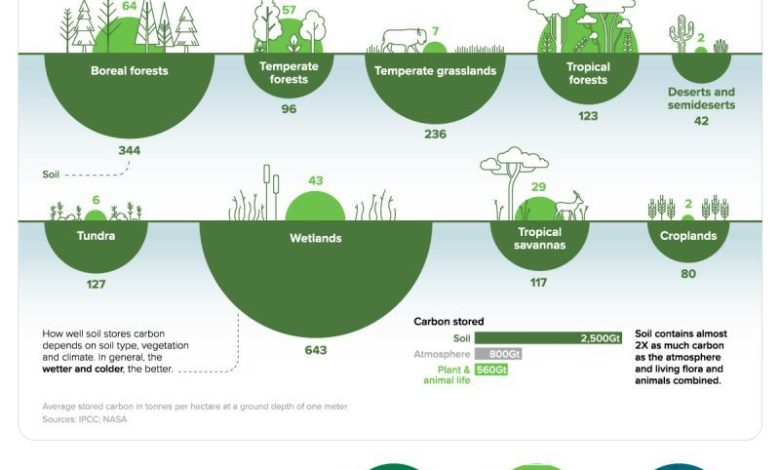
Imagine Earth as a finely tuned machine, designed over millennia to keep life thriving. One of its most impressive feats? Storing carbon to maintain a balance in the atmosphere and regulate the planet’s climate. Across vast forests, sprawling grasslands, vibrant wetlands, and teeming oceans, Earth’s ecosystems act as living reservoirs, capturing and storing carbon in a delicate dance that supports all life forms.
The Carbon Cycle: A Symphony of Nature
Carbon is the building block of life, cycling through land, air, and water in a natural rhythm. Plants, oceans, and soils are key players in this cycle, drawing in carbon dioxide (CO2) from the atmosphere and storing it in organic matter. Through photosynthesis, plants convert CO2 into energy, releasing oxygen as a byproduct. This carbon becomes part of their biomass — roots, trunks, leaves — and enters the soil when plants decompose. Animals and microbes contribute by feeding, breathing, and decomposing, ensuring carbon continues its journey.
But in recent centuries, human activities — burning fossil fuels, deforestation, and industrial processes — have disrupted this natural balance, releasing vast amounts of CO2 back into the atmosphere. The result? Rising global temperatures, extreme weather, and a climate crisis. Fortunately, nature’s ecosystems remain powerful allies in absorbing and storing carbon, offering hope in the fight against climate change.
Forests: The Lungs of the Planet
Towering trees, dense canopies, and sprawling undergrowth make forests the most famous carbon sinks. Tropical rainforests like the Amazon and Congo absorb massive amounts of CO2 while temperate and boreal forests also play vital roles. The carbon they store isn’t limited to their trunks and branches — it extends deep into the soil, locked away for centuries. Protecting and restoring forests can dramatically reduce CO2 levels, offering a natural solution to mitigate climate change.
Grasslands and Savannas: Hidden Heroes
Often overlooked, grasslands and savannas are unsung heroes of carbon storage. Their vast root systems sequester carbon underground, where it remains stored in soils for decades or longer. These ecosystems are resilient, adapting to wildfires and grazing, which stimulate new growth and maintain their carbon-storing potential. However, overgrazing and land conversion for agriculture threaten their delicate balance.
Wetlands: Nature’s Sponges
Wetlands, including peatlands, marshes, and mangroves, are among the most efficient carbon storage ecosystems on Earth. They trap carbon in waterlogged soils, creating anoxic conditions that slow decomposition. Peatlands alone store more carbon than all the world’s forests combined. Yet, they’re rapidly disappearing due to drainage, agriculture, and urban development. Conserving wetlands is essential for preserving their immense carbon storage capacity.
Oceans: The Ultimate Carbon Sink
Covering 70% of the planet, oceans absorb around a quarter of the CO2 emitted by human activities each year. Phytoplankton, microscopic organisms in the ocean, play a vital role by photosynthesizing and transferring carbon to deeper waters when they die. Coastal ecosystems like seagrasses, kelp forests, and coral reefs also act as carbon sinks. However, ocean warming, acidification, and pollution threaten their ability to function effectively.
A Call to Action: Protect, Restore, Innovate
Preserving and enhancing the carbon storage capacity of Earth’s ecosystems is not just an environmental priority — it’s a necessity for human survival. Here’s how we can take action:
- Protect Natural Ecosystems: Halt deforestation, prevent wetland drainage, and safeguard grasslands and marine ecosystems from degradation.
- Restore Degraded Landscapes: Reforest cleared lands, restore wetlands, and regenerate soils to reinvigorate carbon storage potential.
- Support Nature-Based Solutions: Encourage policies and practices that harness nature to combat climate change, such as agroforestry, sustainable land use, and blue carbon initiatives.
- Advance Innovation: Invest in research and technologies that enhance natural carbon storage, like biochar or microbial solutions.
- Engage Communities: Empower local and Indigenous communities, who have long been stewards of nature, to lead conservation and restoration efforts.
The Power of Nature
As we face the challenges of climate change, it’s easy to feel overwhelmed. But Earth’s ecosystems remind us that nature has always been a source of resilience and hope. By working alongside these natural systems, protecting and restoring them, we can harness their incredible power to store carbon, heal the planet, and ensure a thriving future for generations to come.
source :


