Climate Adaptation and Climate Mitigation
ClimateAdaptation and Tagar#ClimateMitigation are two fundamental strategies employed to address the challenges posed by climate change. While they are interconnected, they focus on different aspects of the climate crisis.
Climate Adaptation refers to the adjustments made in response to the actual or expected impacts of climate change.
Key characteristics include:
– Focus on Tagar#Effects: Adaptation addresses the consequences of climate change, such as rising sea levels, increased frequency of extreme weather events, and shifting agricultural conditions.
– Tagar#Localized Strategies: Adaptation measures are often region-specific and tailored to local conditions, such as building flood defenses or developing drought-resistant crops.
– Tagar#Long_term Approach: Adaptation is generally seen as a long-term strategy, requiring ongoing adjustments as climate conditions evolve.
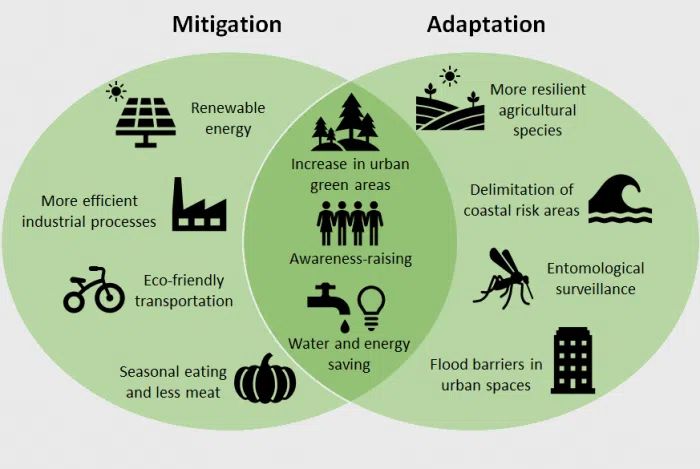
– Examples of Tagar#Actions: These can include improving water management systems, enhancing infrastructure resilience, and modifying agricultural practices to cope with changing climate patterns
Climate Mitigation, on the other hand, involves efforts to reduce or prevent the emission of greenhouse gases, thereby addressing the root causes of climate change.
Key characteristics include:
– Focus on Tagar#Causes: Mitigation seeks to tackle the sources of climate change by reducing greenhouse gas emissions and enhancing carbon sinks (like forests and oceans).
– Tagar#Global Perspective: Mitigation strategies are typically broader and more global in nature, aiming for collective action across nations to achieve significant reductions in emissions.
– Tagar#Short_term and Tagar#Long_term Goals: While some mitigation actions can yield immediate benefits (like transitioning to renewable energy), the full effects may take decades to manifest.
– Examples of Tagar#Actions: This includes transitioning to renewable energy sources, improving energy efficiency, and implementing carbon capture technologies
Overlapping Aspects of Adaptation and Mitigation
– Tagar#ComplementaryStrategies: Both approaches are essential for a comprehensive response to climate change. Effective mitigation can reduce the severity of climate impacts, thereby lessening the need for extensive adaptation measures. Conversely, successful adaptation can help communities cope with the impacts of climate change that are already unavoidable, making it easier to implement mitigation strategies in the long run
– Tagar#IntegratedPolicies: Many climate policies aim to integrate both adaptation and mitigation. For instance, sustainable land-use practices can enhance carbon storage (mitigation) while also improving agricultural resilience to climate impacts (adaptation)
– Tagar#SharedGoals: Both strategies ultimately aim to protect human health, livelihoods, and the environment. They seek to ensure sustainable development and reduce risks associated with climate change, highlighting the necessity of coordinated efforts to address the crisis effectively
Source: