Climate change is not one risk among many, It is a risk multiplier
Climate change is not one risk among many.
It is a risk multiplier.
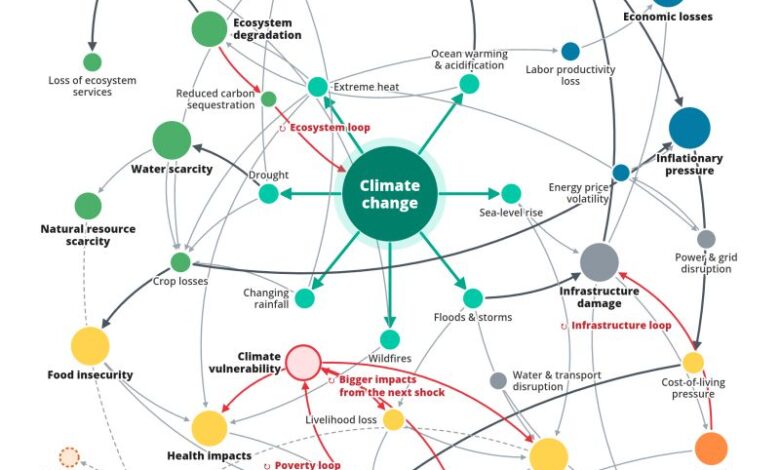
A drought can reduce crop yields, increase pressure on water supplies and push food prices higher. Flooding can damage infrastructure, interrupt supply chains and increase economic losses. Extreme heat can affect health, labor productivity and energy systems. Ecosystem degradation can weaken natural resilience while biodiversity loss, water scarcity and declining fisheries create additional pressure on livelihoods and food security.
Those effects can then travel much further. Higher costs can contribute to inflationary pressure. Economic losses can increase poverty and inequality. Repeated disasters can strain public finances and institutional capacity. Displacement can put additional pressure on housing and public services. In contexts already facing inequality, resource scarcity or weak institutions, those pressures can also contribute to greater social tension.
The important point is not that climate change directly causes every one of these outcomes. It is that climate impacts can amplify existing vulnerabilities and transmit shocks across environmental, economic and social systems.
And those relationships can become reinforcing cycles: climate impacts increase poverty and weaken infrastructure or institutional capacity, reducing the ability to adapt and potentially making the consequences of the next shock even larger.
That is why climate risk increasingly needs to be understood as systemic risk.
The diagram below maps some of these connections and feedback loops. It is illustrative rather than quantitative, but it shows how quickly an environmental shock can become an economic and social one.
Source inspiration: UN Global Risk Report 2026