
Governance and Sustainability
Governance and Sustainability
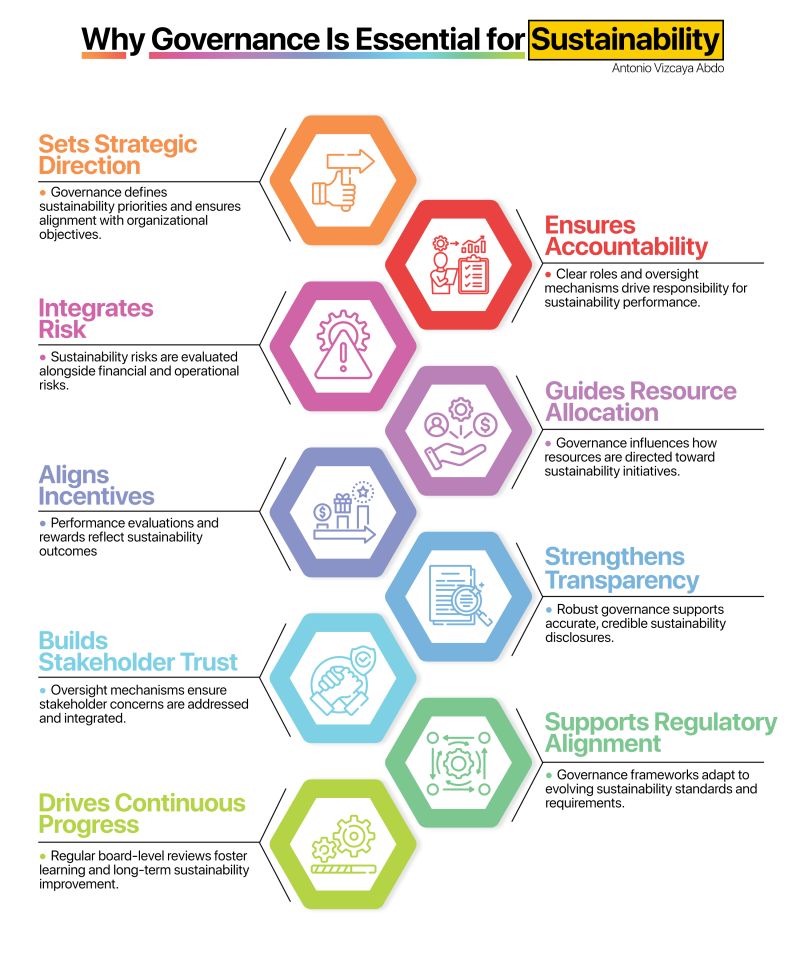
Governance is a foundational element for advancing sustainability. It connects strategic priorities with operational execution and ensures that sustainability is not treated as an isolated function.
It provides strategic direction by defining sustainability goals that align with broader business objectives. This alignment ensures that environmental and social factors are embedded across the organization.
Accountability is reinforced through governance structures. Clear roles, oversight mechanisms, and defined responsibilities drive performance and reduce the risk of fragmented efforts.
Effective governance integrates sustainability risks into enterprise risk management. ESG risks are evaluated alongside financial and operational exposures to support more resilient decision-making.
Resource allocation is influenced by governance. Structures and processes ensure that capital and capabilities are directed toward initiatives that generate long-term environmental and social value.
Incentives are aligned through governance. Compensation, evaluation, and recognition frameworks reflect sustainability outcomes, creating stronger internal drivers for impact.
Governance enhances transparency. It supports the production of accurate and credible sustainability disclosures, increasing trust among investors, regulators, and other stakeholders.
It also builds stakeholder confidence. Feedback mechanisms and engagement processes ensure that diverse voices are heard and integrated into strategy and reporting.
Governance enables adaptability. As regulations and expectations evolve, governance frameworks ensure that organizations remain aligned with current standards and positioned to lead in sustainability performance.
Sources:


