How to control scope 3 emissions
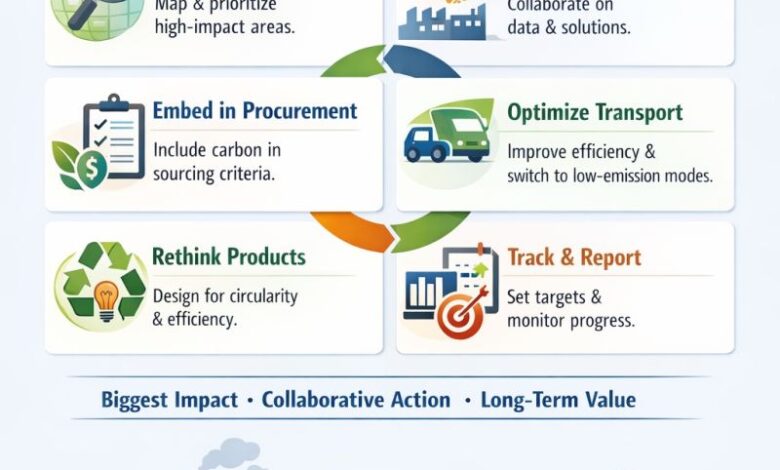
Controlling Scope 3 emissions represents the “frontier” of corporate sustainability, as these indirect emissions typically account for 70–90% of an organization’s total carbon footprint. Because these emissions occur outside a company’s direct operational walls, management shifts from direct ownership to strategic influence and value-chain collaboration.
The following roadmap outlines how organizations can transition from awareness to active mitigation:
1. Data-Driven Prioritization: Mapping the “Hotspots”
The first step is moving beyond broad estimates to precise value-chain mapping. Organizations must identify and prioritize high-impact categories, which often include:
- Purchased Goods and Services: The carbon intensity of raw materials.
- Logistics: The emissions generated by moving products through the supply chain.
- Product End-of-Life: Emissions associated with how customers use and eventually dispose of products.
2. Supplier Synergy: From Compliance to Collaboration
Since Scope 3 emissions are essentially a supplier’s Scope 1 and 2, deep engagement is mandatory.
- Primary Data Collection: Move away from industry averages by working with suppliers to gather actual emission data.
- Capability Building: Support suppliers in adopting low-carbon practices and setting their own reduction targets.
3. Decarbonizing the Procurement Engine
Procurement must evolve from a cost-center to a sustainability driver by embedding ESG performance into the selection process.
- Incentivize Low-Carbon Sourcing: Prioritize vendors that offer high recycled content or lower carbon intensity.
- Optimize Logistics: Partner with transportation providers that utilize route optimization and greener transport modes.
4. Circular Design and Business Model Innovation
True control over Scope 3 often requires rethinking the product itself.
- Design for Durability: Extending product lifespans reduces the frequency of replacement and production.
- Circular Economy: Implementing reuse and recycling programs to minimize lifecycle emissions.
5. Accountability and Standards
To ensure credibility, organizations should align their Scope 3 reduction targets with the Science Based Targets initiative (SBTi). Transparent reporting using globally recognized standards allows for measurable progress and builds stakeholder trust.
| Strategy Component | Focus Area |
| Materiality | Identifying the top 3-5 categories that drive the most emissions. |
| Procurement | Integrating carbon metrics into sourcing decisions alongside cost. |
| Logistics | Shifting to lower-emission transport modes and efficient routing. |
While Scope 3 emissions are complex, they represent the greatest opportunity for building long-term value, operational resilience, and meaningful climate impact.