Artikel
Inside Indonesia’s upcycling design revolution
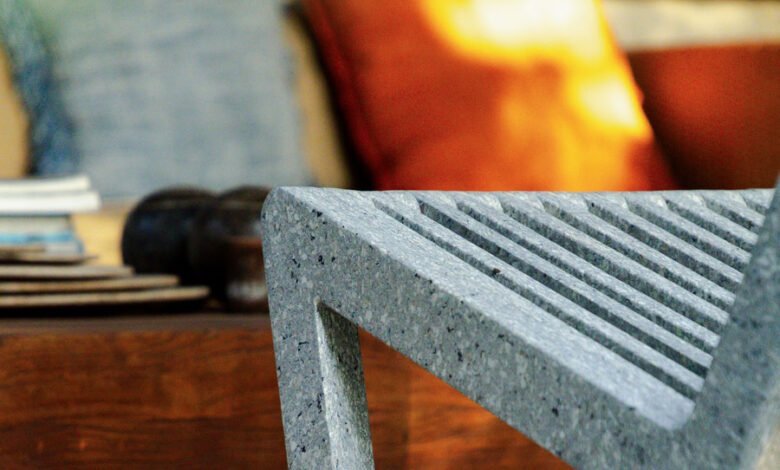
Inside Indonesia’s Upcycling Design Revolution: Redefining Luxury Through Sustainability
In the traditional furniture industry, value was dictated by material scarcity rare hardwoods, full-grain leathers, and precious metals. Today, a paradigm shift is occurring across Indonesia. A new cohort of designers, environmentalists, and engineers from Bali to Bandung are redefining luxury by transforming discarded waste into high-end architectural elements, functional furniture, and fine art.
Comparative Overview of Innovation Hubs
| Design Lab | Primary Raw Material | Signature Products | Core Technology / Process |
| Sungai Design (Bali) | Recycled plastic bags & river debris | Ombak Chair, Muara Stool/Bench, UMA Chair | Heat-pressed plastic sheets with marbled finishing |
| ChopValue (Bali) | Discarded single-use chopsticks | Carbon-negative tables, desks, wall tiles, homeware | Densified composite manufacturing under high heat & pressure |
| Parongpong RAW Lab (Bandung) | Ghost fishing nets, mixed plastics, coffee grounds | Jala! panels, Prototiles®, ORIPLAS® timber-alternatives | Prototech® proprietary waste-blending system |
| Kayu Lama (Jepara / Bali) | Salvaged teak & aged pine | Refined-rustic indoor/outdoor furniture, full interior builds | Architectural reclamation & heritage woodwork |
Key Pioneers Driving the Market
1. Sungai Design (Bali)
- The Origin: Born out of Sungai Watch, an environmental organization that intercepts 6 to 8 tons of river waste daily.
- The Material Shift: Single-use plastics which take 20 to 1,000 years to degrade are re-framed as hyper-durable raw materials.
- Flagship Innovation: The Ombak Chair, crafted from approximately 2,000 upcycled plastic bags (30 kg), showcases a distinct marbled aesthetic that celebrates the material’s origin rather than concealing it.
- Commercial Applications: Expands into homeware (trays, coasters, incense holders) and commercial spaces across Indonesia.
2. ChopValue Indonesia (Bali)
- The Origin: Founded globally by timber engineer Felix Böck and brought to Bali by Orin Hardy to execute a decentralized “microfactory” model.
- The Material Shift: Single-use bamboo/wood chopsticks are harvested locally from restaurants, cafes, and hotels.
- Technical Performance: Through high-heat pressure and non-toxic resins, the processed material becomes harder than maple, stronger than oak, and as durable as teak.
- Environmental Impact: Rescued 100+ million chopsticks globally to date; operates as a carbon-negative process that sequesters more $\text{CO}_2$ than it emits.
3. Parongpong RAW Lab (Bandung)
- The Origin: Founded by Rendy Aditya Wachid in 2017 as a research-driven laboratory focused on complex, mixed waste streams.
- Key Innovations:
- Jala!: Transforms abandoned “ghost” fishing nets into architectural wall panels and decorative interior elements.
- Prototiles®: Converts post-consumer mixed waste into load-bearing, full-scale architectural tiles.
- ORIPLAS®: Recycled plastic planks that serve as direct substitutes for timber in construction and framing.
- Ecosystem Expansion: Developing SISA, a digital platform designed to directly connect waste suppliers with architects and industrial manufacturers.
4. Kayu Lama (Jepara & Bali)
- The Origin: Established over two decades ago by Irwan Malik and Triyoga Nugraha, translating decades of international timber export experience back to the domestic market via KAYULAMA Home.
- The Material Shift: Rescued architectural teak and pine featuring natural weathering, cracks, and historical marks.
- Market Impact: Combines traditional Jepara craftsmanship with modern minimalist design, making upcycled timber the primary choice for boutique hotels, resorts, and eco-luxury residences across Bali.
source:
https://www.nowjakarta.co.id/inside-indonesias-upcycling-revolution/