
Integrating nature-based solutions into urban & territorial planning
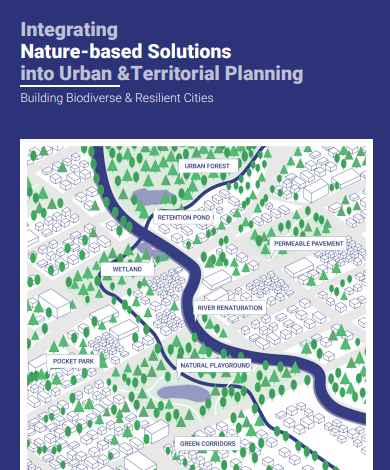
In a rapidly urbanizing world, the need for cities to become sustainable is not only urgent but an existential imperative. With urban areas housing over 56% of the global population, a figure
expected to rise to 68% by 2050, says UN | UN DESA | United Nations Department of Economic
and Social Affairs, the environmental, social, and economic pressures on cities are intensifying.
Cities, despite occupying only 3% of the earth, are responsible for about 70% of the world’s carbon
emissions, thus contributing significantly to climate change.
It is projected that 90% of the increase in the world’s population will take place in the Global South, especially in Asia and Africa. These continents already face significant challenges related to climate vulnerabilities, poverty and inadequate infrastructure, thus rapid and unplanned population growth is expected to exacerbate these challenges. According to the World Bank, cities in these regions
could face climate-related economic losses of up to $1 trillion by 2050 if no action is taken. The
vulnerability of these cities is exacerbated by the “urbanization of poverty,” where low-income
communities often live in informal settlements that lack basic services and are particularly exposed to
environmental hazards.
Immediate action is essential not only to mitigate these impacts but also to prevent future costs
associated with climate change. Studies show that the cost of inaction will vastly outweigh the cost
of implementing climate-resilient measures now. The Global Commission on Adaptation highlights
that increased investments in climate adaptation, particularly through nature-based approaches,
can significantly increase economic benefits by reducing future damages from climate impacts. In
this case, an investment of a 1 dollar can translate to up to 10 dollars of benefits. In addition, delaying action could lock cities into unsustainable development patterns, making it significantly harder and more expensive to address climate issues later due to entrenched infrastructure, socio-economic systems, and governance structures that are not designed for resilience.
source:


