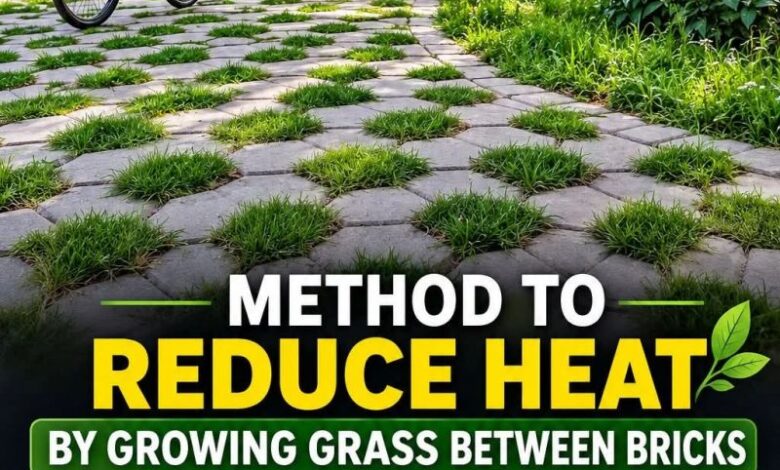
Method to reduce heat by growing grass between bricks
Greener Streets, Cooler Cities: Using Grass-Paved Permeable Blocks to Combat Urban Heat
As cities expand, vast stretches of asphalt and solid concrete absorb and retain solar radiation, giving rise to the Urban Heat Island (UHI) effect. One accessible, multi-benefit solution to mitigate microclimate heat is the integration of grass within permeable paving blocks often referred to as eco-pavers, turf pavers, or open-cell grid systems.
1. How Grass-Paved Bricks Reduce Temperatures
Unlike traditional concrete or asphalt surfaces, which act as thermal masses that store and radiate intense heat throughout the day and night, grass-paved permeable systems reduce surface and ambient temperatures through two primary mechanisms:
- Evapotranspiration: Living grass absorbs solar energy and releases moisture into the atmosphere through transpiration. This natural process acts as a localized air conditioner, actively cooling the surrounding microclimate.
- Lower Thermal Emissivity and Reflectance: Green vegetation has a significantly lower surface heat capacity compared to dark, dense paving materials, preventing high thermal accumulation on ground level.
[Traditional Asphalt / Solid Concrete]
Solar Radiation ──► High Absorption ──► Radiated Heat (Elevated UHI Effect)

[Grass-Paved Permeable System]
Solar Radiation ──► Evapotranspiration + Reduced Heat Storage ──► Cooler Microclimate
2. Key Environmental & Infrastructure Benefits
Beyond temperature reduction, grass-paved systems address several critical urban challenges simultaneously:
- Stormwater Management: The open grid layout permits rainwater to infiltrate directly into the underlying soil. This reduces surface runoff, mitigates localized flooding, and recharges underground aquifers.
- Enhanced Soil Quality & Bio-Filtration: As rainwater passes through the turf and soil layer, natural filtration processes remove heavy metals and common urban pollutants before the water reaches groundwater tables.
- Improved Pedestrian Comfort: Lower surface temperatures significantly decrease heat radiation at ground level, creating a more comfortable environment for walking, biking, and outdoor activity.
3. Implementation and Engineering Best Practices
To ensure long-term durability and functionality, grass-paved systems require proper selection and installation:
| Parameter | Recommended Specification |
| Paving Material | High-density concrete grids or recycled plastic open-cell pavers designed for load distribution. |
| Sub-Base Layer | A crushed stone or gravel bed (15–30 cm) to facilitate drainage and structural stability. |
| Turf Selection | Drought-tolerant, wear-resistant, and low-maintenance grass species (e.g., Zoysia, Bermudagrass, or native ground covers). |
| Maintenance Need | Periodic mowing, aeration, and clear drainage paths to prevent soil compaction over heavy traffic areas. |
4. Integration into Urban Design
While grass-paved bricks are highly effective for driveways, parking spaces, pedestrian walkways, and public plazas, they yield the best results when integrated into a broader Green Infrastructure Strategy. Combining permeable turf paving with urban tree canopies, bio-swales, and vertical greening maximizes shading and cooling benefits across dense urban landscapes.
source: