Buku
THE 8 PRINCIPLES OF SIDEWALKS
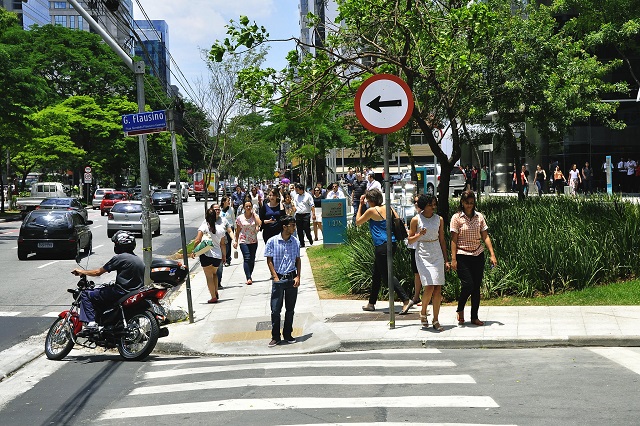
- Urban space and infrastructure dedicated to pedestrians should be prioritized on public agendas, considering that the majority of Brazilians are walking commuters.
- Sidewalks are spaces for pedestrian circulation and occupation and are comprised of elements that go beyond merely paving walkways that run alongside roadways.
- This guide proposes eight principles for the construction of spaces appropriate for pedestrians, based on extensive reviews of national and international literature.
- The elements are described objectively, including the design, benefits, and real examples of application.
- To ensure coordination among the players responsible for the construction, maintenance, and qualification of this infrastructure, it is fundamental that each of the different elements that comprise a sidewalk is clearly understood and taken into account.
CONTEXT
Walking is the most democratic way to commute. It is the oldest and most common mode of transport in the world, not to mention being a far healthier option – for both people and cities. However, the expansion of cities, facilitated by decades of prioritizing private, motorized mobility, along with the substandard quality of sidewalks, has dissuaded people from walking. Poor-quality paving, insufficient widths for pedestrian circulation, and crudely designed urban furniture have all contributed to this issue.
Source:
https://www.wribrasil.org.br/sites/default/files/8-Principles-of-Sidewalks.pdf