The Sustainability Framework
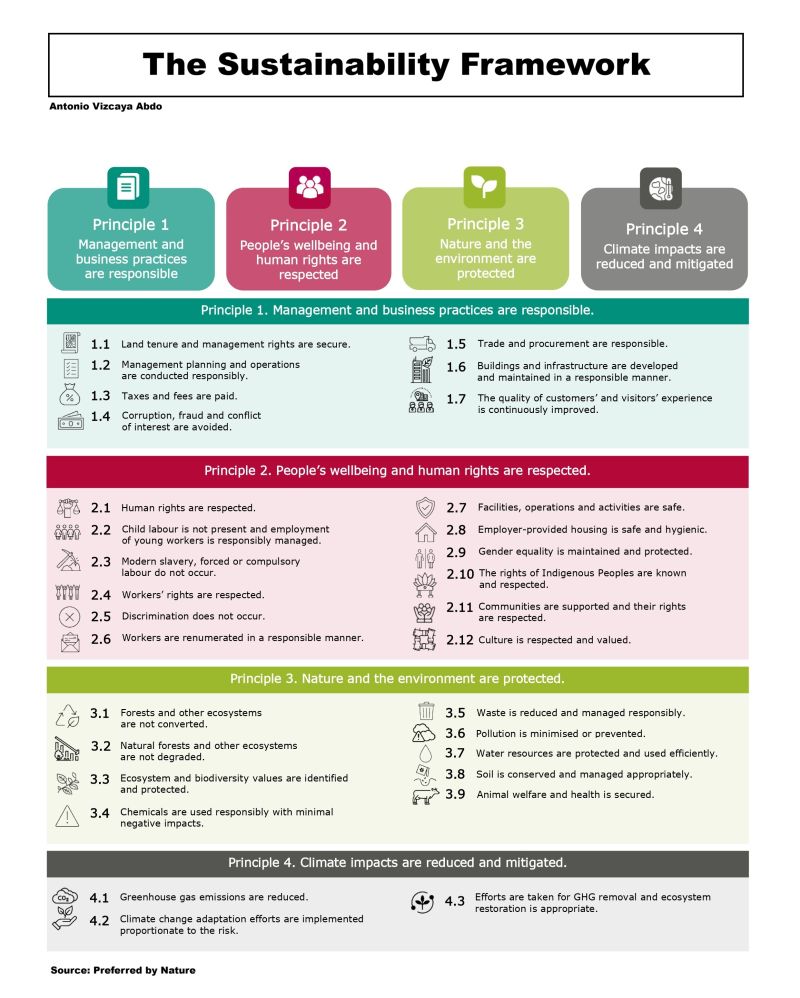
This framework by Preferred by Nature provides a comprehensive snapshot of the key themes and operational areas that organizations must address to implement robust sustainability practices across sectors. It structures sustainability into four interconnected principles: responsible business conduct, human rights and well-being, environmental protection, and climate impact mitigation.
The first principle emphasizes sound governance and responsible management practices. It includes secure land tenure, compliance with legal obligations, anti-corruption measures, responsible procurement, and infrastructure development that minimizes harm. These elements form the foundation for credibility and resilience in sustainability efforts.
The second principle focuses on human rights, labor conditions, and community engagement. It outlines clear criteria to prevent forced labor, child labor, and discrimination, while promoting fair wages, occupational safety, and gender equality. It also recognizes the rights of Indigenous Peoples and calls for respect for cultural heritage and community wellbeing.
Environmental protection is at the core of the third principle, with a strong focus on avoiding deforestation, preventing ecosystem degradation, and conserving biodiversity. The framework mandates the responsible use of chemicals, improved waste and pollution management, and efficient water and soil stewardship, aligning with international conservation standards.
Animal welfare is also addressed within the environmental domain, establishing safeguards for animal health, nutrition, and natural behaviors. This criterion reinforces the framework’s integrated view of environmental and ethical performance in land-based production systems.
Climate action is treated as a distinct principle, recognizing the urgency of reducing greenhouse gas emissions. The framework calls for best practices in land use, material sourcing, and energy efficiency, while encouraging companies to align with sectoral emission targets and national climate policies.
Adaptation to climate risks is also prioritized. Organizations are expected to assess climate vulnerabilities and implement proportional adaptation measures, particularly in high-risk contexts where social, economic, and environmental impacts are significant.
The final climate-related criterion encourages ecosystem restoration and carbon removal where feasible. These actions are framed not only as mitigation strategies but as opportunities to enhance long-term ecological function and community resilience.
Overall, the Preferred by Nature Sustainability Framework offers a technically sound and adaptable structure that integrates legal compliance, ethical standards, and environmental integrity. It serves as a practical reference for certification, due diligence, and investment alignment in sustainability-driven supply chains.
Source: