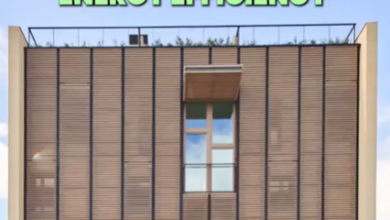
Turning Household Waste into City Fuel
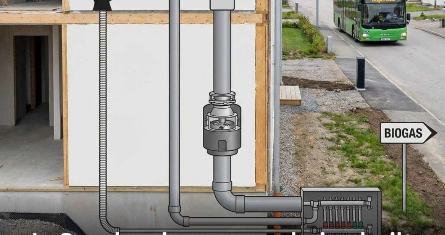
Sweden is redefining urban living with an innovative wastewater system that treats household waste as a valuable resource. In some new neighborhoods, homes are built with three separate sewage pipes: one for vacuum toilets, one for greywater, and one for food waste.
Vacuum toilets send concentrated waste to treatment facilities, greywater from sinks and showers is treated separately, and kitchen food waste is ground and routed through a dedicated pipe. This separation allows each type of waste to be processed efficiently, maximizing resource recovery.
Food waste undergoes anaerobic digestion, producing biogas that fuels local buses and biofertilizers for agriculture. Greywater can be cleaned and reused, while nutrients like nitrogen and phosphorus from toilet and food waste are recovered rather than lost. The system turns what was once discarded into renewable energy, clean water, and valuable fertilizers.
Projects like Helsingborg’s Oceanhamnen district show how cities can close the loop between households, energy, and transport. By separating waste streams, Sweden achieves higher efficiency, reduces environmental impact, and demonstrates that circular urban infrastructure is possible even in dense city areas.
This approach highlights a new way of thinking: urban waste is not a problem to manage—it is a resource to harness. Imagine a city where yesterday’s leftovers help power today’s buses. That’s not the future—it’s happening now.