Unmasking the reality of greenwashing: a deeper look at the impact
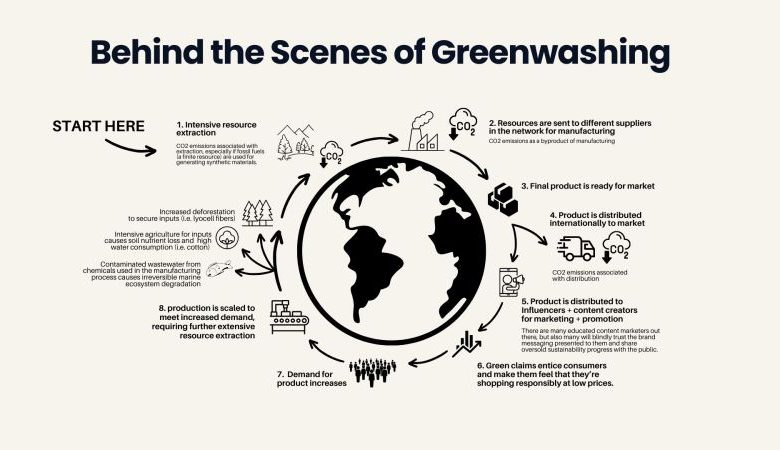
Raichlee Kelly’s insightful diagram pulls back the curtain on the often-hidden effects of greenwashing, exposing how businesses’ misleading eco-friendly claims affect our environment and consumer trust.
In a world where consumer culture meets influencer marketing, and people increasingly want to shop consciously, greenwashing creates a harmful cycle. Phrases like “eco-friendly” or “sustainable” flood marketing messages, yet without visible, verifiable steps to back these claims, consumers are left with little proof of real action. This misuse of terminology isn’t just misleading—it’s a roadblock to genuine sustainability.
So, why does this matter? Sustainable business practices aren’t just a trend; they set a standard for continuous improvement and drive progress across industries. When greenwashing terms are passed off as authentic action, businesses miss the opportunity to build trust, while overextraction of our planet’s resources remains unchecked. Without transparency and honesty, sustainability becomes a hollow promise, and consumers’ desire to make a positive impact is undermined.
True sustainable business isn’t about being flawless; it’s about accountability, honesty, and real commitment to improvement. For companies, that means moving beyond buzzwords and showcasing genuine steps toward a smaller footprint. For consumers, it’s a call to look deeper and ask tougher questions. Let’s shift the focus from appearances to impact.
source :