
What 1 ton of food waste can do
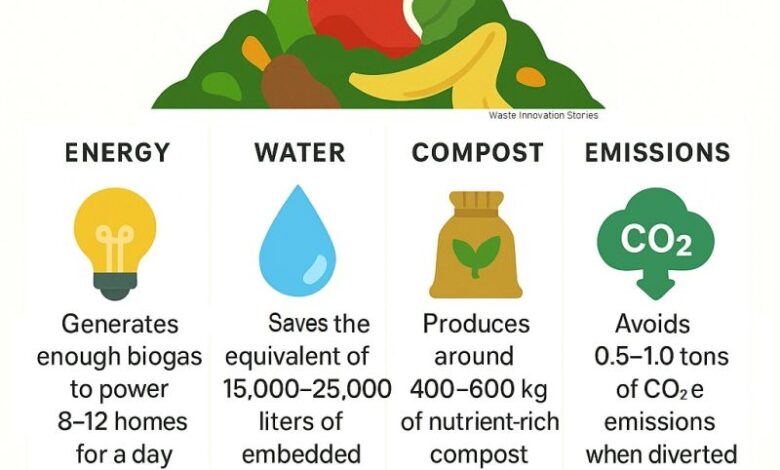
The Alchemy of One Ton: From Liability to Asset
In a linear economy, food waste is a methane bomb. In a Circular Economy, it is the fuel for a regenerative future. Here is what happens when we intercept one ton (1,000 kg) of food waste before it reaches the landfill:
1. The Energy Multiplier (Biogas)
Food waste is incredibly energy-dense. Through Anaerobic Digestion (AD), microbes break down organic matter in an oxygen-free environment to produce biogas (mostly methane and CO2).
- The Output: Approximately 300 to 400 m3 of biogas.
- The Impact: This is enough to generate 600–800 kWh of electricity equivalent to powering 10 average homes for a full day or driving an electric vehicle over 4,000 kilometers.
2. The Soil Regeneration Engine (Compost)
When composted, that same ton of waste creates a “slow-release” nutrient goldmine.
- The Output: 400–600 kg of high-grade organic compost.
- The Impact: This replaces synthetic, petroleum-based fertilizers. It improves soil structure, allowing land to hold 20% more water, which creates a natural defense against droughts and floods.
3. The Invisible Resource: Virtual Water
Every meal carries a “water footprint” from the farm to the table. Throwing away food is effectively like leaving the tap running.
- The Recovery: Saving one ton of food waste preserves 15,000 – 25,000 liters of “embedded” water.
- Perspective: That is enough drinking water for one person for nearly 25 years.
Comparison: Landfill vs. Circular Recovery
| Metric | Landfill (The Old Way) | Circular Recovery (The New Way) |
| Climate Impact | Releases Methane CH4, 25 x more potent than CO2 | Avoids 1 ton of CO2e emissions. |
| Soil Health | Contributes to toxic “leachate” runoff. | Restores topsoil and microbial life. |
| Economic Value | Costs money in “tipping fees” and transport. | Generates revenue through energy and fertilizer sales. |
The Strategic Shift: How to Scale the Impact
To unlock this value, we must move from individual “hacks” to systemic infrastructure:
- Industrial Symbiosis: Connecting grocery chains directly to local anaerobic digesters to power their own delivery trucks with converted biogas.
- The “Third Bin” Policy: Implementing mandatory organic waste collection in cities (like the model used in San Francisco or Milan) to ensure zero organic matter enters the landfill.
- Upcycled Food Movement: Redesigning products to use “ugly” produce or manufacturing by-products (like spent grain from beer) into high-value snacks.
One ton of food waste is a failure of management, but it is also a massive opportunity for resource independence. If we can solve the “food waste” problem, we simultaneously address energy security, water scarcity, and soil depletion.


