When Roads Start Generating Light
What if infrastructure didn’t just consume energy — but stored and revealed it?
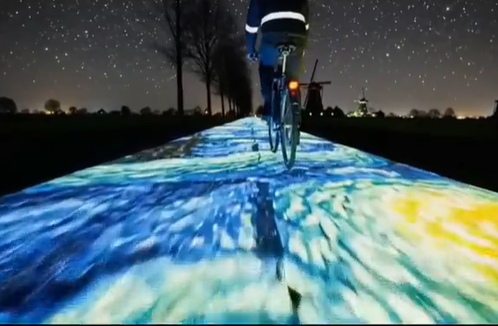
In the Netherlands, a cycling path inspired by Van Gogh’s Starry Night glows softly after sunset. During the day, the surface absorbs sunlight through photoluminescent materials embedded in the pavement. At night, it releases that stored energy, creating a luminous trail of swirling blue light for cyclists.
This is more than an artistic experiment. It reflects a deeper shift in how we think about energy and design.
Instead of treating roads, buildings, and public spaces as passive structures, they are becoming active participants in the energy system — capturing sunlight, reducing dependency on grid-powered lighting, and improving visibility without continuous electricity use.
As cities move toward decarbonization, solutions like this point to a future where infrastructure is not separate from the energy transition, but part of it. Streets that glow, buildings that generate, and materials that respond to their environment are no longer concepts — they are early signals of what’s coming.
The energy shift is not only about replacing fossil fuels. It’s about reimagining the world we already built.
And sometimes, that future begins with a bicycle path that looks like a painting in the dark.