12 Opportunities to Reduce Scope 3 Emissions
Scope 3 emissions account for the majority of total emissions in most sectors. Despite their scale, they remain largely unaddressed due to limited visibility, fragmented data, and operational complexity across value chains.
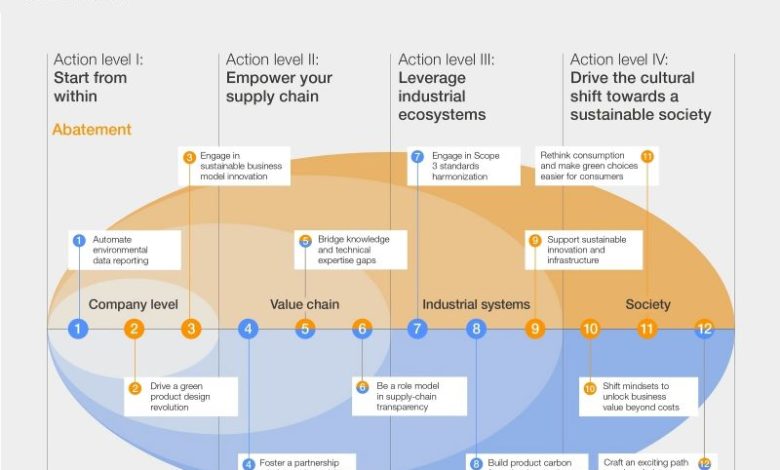
A structured approach is needed. The World Economic Forum proposes 12 opportunity areas, grouped into four levels of action—from internal change to system-wide transformation.
At the company level, priority actions include automating environmental data, embedding sustainability into product design, and rethinking core business models to reduce upstream and downstream impact.
Within supply chains, companies can enable progress by aligning incentives with suppliers, investing in capability building, and setting transparency benchmarks that drive performance.
Sector-wide collaboration is equally critical. Harmonizing standards and developing interoperable product-level data systems can streamline disclosure and accelerate industry-wide progress.
Innovation infrastructure must also evolve. Supporting shared platforms and green technology ecosystems can lower the cost of decarbonization and reduce duplication of efforts.
Societal levers play a reinforcing role. Shifting demand patterns and unlocking value beyond short-term cost can create the conditions for faster, more durable change.
Scope 3 cannot be addressed in isolation. These 12 actions represent a roadmap for moving from fragmented initiatives to coherent strategies aligned with long-term decarbonization.
Source: WEF
Source: