15 Global case studies from Dubai to Detroit urban transformation
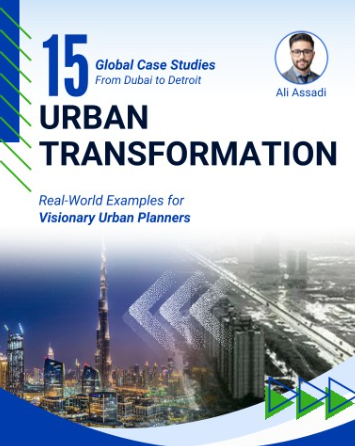
Cities are living, evolving entities, shaped by history, people, and forward-thinking policies. Across the globe, urban planners are redefining spaces to foster sustainability, economic growth, and community resilience. From the gleaming skyscrapers of Dubai to the revitalized neighborhoods of Detroit, these 15 case studies showcase urban transformation at its finest—providing inspiration and actionable insights for cities worldwide.
1. Dubai, UAE: Smart Urbanism and High-Tech Sustainability
Dubai’s urban metamorphosis is a testament to bold vision and technological innovation. The city integrates AI-driven traffic management, energy-efficient skyscrapers, and green mobility solutions, setting a benchmark for future-ready urbanism.
2. Detroit, USA: From Decline to Renaissance
Once a symbol of economic hardship, Detroit has undergone a dramatic resurgence. Investments in local businesses, creative repurposing of abandoned buildings, and community-led projects have breathed new life into the city, proving that transformation starts with people.
3. Singapore: Green Urbanism in a Dense Metropolis
Singapore is a model for compact, sustainable living. Vertical gardens, extensive public transport, and stringent urban planning have turned this city-state into a leader in green urbanism, demonstrating that density and sustainability can go hand in hand.
4. Medellín, Colombia: Mobility as a Social Equalizer
Once plagued by violence, Medellín reinvented itself with a revolutionary public transport system, including cable cars and outdoor escalators connecting underserved communities to economic opportunities.
5. Copenhagen, Denmark: Biking Towards a Carbon-Neutral Future
Copenhagen’s commitment to becoming carbon-neutral by 2025 is driven by its investment in cycling infrastructure, pedestrian-friendly streets, and renewable energy—proving that sustainability is a way of life, not just a policy.
6. Kigali, Rwanda: Africa’s Cleanest and Most Organized City
With strict waste management policies, car-free zones, and ambitious green city projects, Kigali showcases how African cities can lead in urban cleanliness and sustainability.
7. Paris, France: The 15-Minute City Movement
Paris is reshaping its neighborhoods to ensure residents can access work, leisure, and essential services within a 15-minute walk or bike ride, reducing reliance on cars and enhancing urban livability.
8. Tokyo, Japan: Hyper-Efficient Land Use and Transit Innovation
With limited space, Tokyo maximizes urban efficiency through mixed-use developments, world-class public transportation, and an unwavering focus on technological advancements.
9. Curitiba, Brazil: Pioneering Bus Rapid Transit (BRT) Systems
Curitiba revolutionized urban transit with its BRT system, inspiring cities worldwide to adopt cost-effective and efficient public transportation.
10. Vancouver, Canada: Nature-Integrated Urban Planning
Vancouver seamlessly blends urban life with nature, boasting extensive green roofs, waterfront regeneration projects, and policies that prioritize ecological balance.
11. Amsterdam, Netherlands: Adaptive Water Management
As a low-lying city, Amsterdam has turned its vulnerability into strength with innovative flood control, floating homes, and climate-resilient infrastructure.
12. Melbourne, Australia: Revitalizing Public Spaces
Once lacking vibrant public areas, Melbourne’s strategic urban renewal has transformed its laneways and riverfront into cultural hubs, proving that reclaiming public space fosters community engagement.
13. Seoul, South Korea: The Cheonggyecheon Stream Restoration
Seoul demolished an overpass to restore a natural stream, enhancing biodiversity, cooling the urban environment, and creating a pedestrian-friendly oasis in the heart of the city.
14. Barcelona, Spain: Superblocks for a People-Centric City
By restricting car traffic in designated areas, Barcelona’s superblocks prioritize pedestrians and cyclists, reducing pollution and fostering social interactions.
15. Vienna, Austria: A Global Leader in Affordable Housing
Vienna’s model of social housing ensures affordability without compromising quality, offering a roadmap for cities grappling with housing crises.
Key Takeaways for Urban Planners:
- Human-Centric Design: Prioritizing people over cars and concrete leads to healthier, more connected communities.
- Sustainability as a Standard: Integrating green infrastructure, public transit, and energy efficiency is essential for long-term urban success.
- Community-Led Transformation: Engaging citizens in urban planning ensures resilience and inclusivity.
- Innovative Policy and Technology: Smart solutions drive efficiency, sustainability, and livability.
Urban transformation isn’t just about infrastructure it’s about fostering environments where people can thrive. Whether through bold innovations or incremental changes, these case studies prove that the future of cities is bright, adaptable, and deeply human-focused.
source :