Three Scopes. A Separate Contribution.
Helping customers reduce emissions is valuable. But it does not erase the footprint of the business providing the solution. Avoided emissions and a company’s emissions inventory need separate accounting. 💡
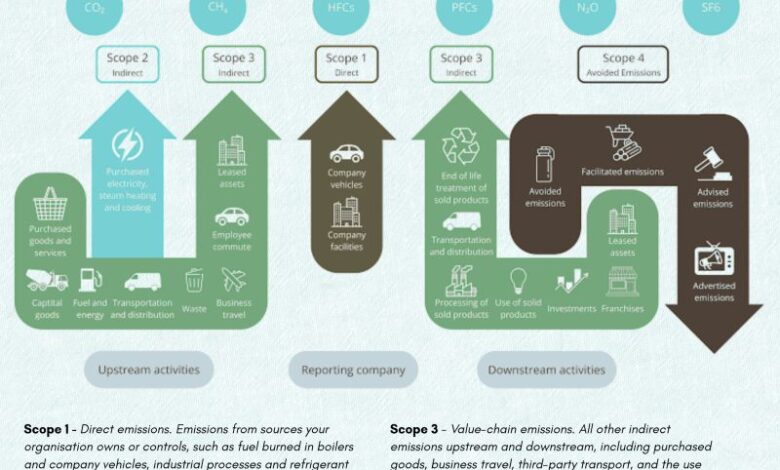
This infographic helps explain where emissions occur and where businesses can influence change.
The distinctions matter:
➡️ Scope 1 – Direct emissions. Emissions from sources your organisation owns or controls, such as fuel burned in boilers and company vehicles, industrial processes and refrigerant leaks.
➡️ Scope 2 – Purchased energy emissions. Indirect emissions from generating the electricity, steam, heating or cooling your organisation purchases and consumes.
➡️ Scope 3 – Value-chain emissions. All other indirect emissions upstream and downstream, including purchased goods, business travel, third-party transport, and the use and disposal of sold products.
➡️ “Scope 4” – Avoided emissions, an unofficial term. Estimated emissions avoided when a product, service or solution is compared with a credible alternative scenario. It is not a fourth inventory scope recognised by the GHG Protocol.
Avoided emissions must be reported separately not deducted from Scope 1, 2 or 3 totals. The comparison needs clear boundaries, a credible baseline and transparent assumptions.
For boards, procurement leaders and sustainability teams, I would use these distinctions to assign responsibility: operational improvements, energy decisions, supplier engagement and better product design.
For ESG and planetary health, my priority is to reduce our footprint while developing solutions that help others reduce theirs without overstating either.