Tahukah Anda
8 Essential carbon pricing mechanisms to combat climate change
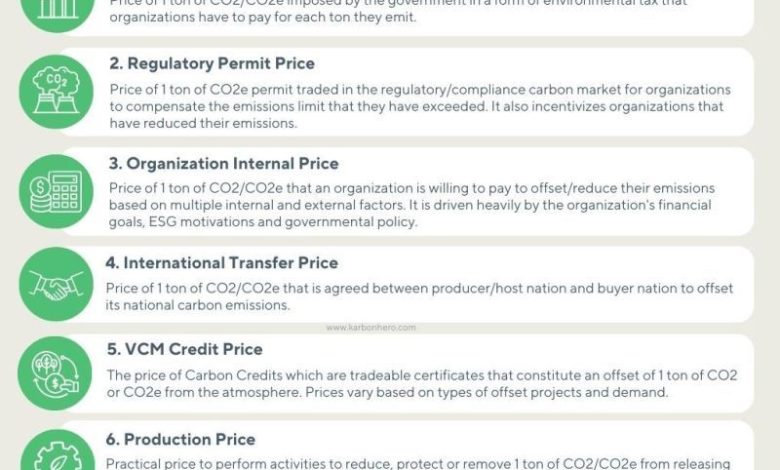
In the race to curb carbon emissions and tackle climate change, financial incentives and regulatory approaches are proving to be key levers for change. This infographic from Karbon Hero, titled “8 Common Types of Carbon Pricing,” unveils the diverse carbon pricing mechanisms now used globally to make organizations, governments, and individuals financially accountable for their environmental impact. Let’s delve into each type and explore how these approaches are transforming our fight against climate change.
- Carbon Tax Price:
A straightforward yet impactful approach, the Carbon Tax directly targets emissions at their source. By imposing a fee on each ton of CO₂ or CO₂e (carbon dioxide equivalent) emitted, governments incentivize organizations to innovate, adopt cleaner technologies, and reduce emissions. This mechanism effectively “puts a price on pollution,” making emitters accountable for their contribution to climate change. Countries like Sweden and Canada have successfully implemented carbon taxes, proving that this tool can reduce emissions while boosting green innovation. - Regulatory Permit Price:
Regulatory permit systems operate within compliance markets, setting strict emissions caps for industries and allowing companies to trade emission permits. Companies that exceed their limit can buy permits from those who emit less, creating a system where the market rewards reductions. Known as “cap-and-trade,” this approach aligns profit motives with environmental goals, encouraging industries to innovate and reduce emissions in a way that makes financial sense. - Organization Internal Price:
Some organizations proactively set an internal carbon price, integrating it into their decision-making processes to fund emission-reducing projects. This internal price reflects the company’s commitment to sustainability, driven by ESG goals, financial planning, or compliance with emerging regulations. By prioritizing emission reductions from within, companies such as Microsoft and Unilever have demonstrated how internal pricing can prepare businesses for future regulations while fulfilling their sustainability pledges. - International Transfer Price:
Climate change is a global issue requiring cross-border solutions. The International Transfer Price enables CO₂/CO₂e credits to be traded between nations, allowing countries with higher emissions to purchase credits from those who have kept emissions below targets. This arrangement fosters international collaboration, making it possible for developed and developing nations to work together toward a collective climate goal. - Voluntary Carbon Market (VCM) Credit Price:
Distinct from compliance markets, the VCM allows organizations and individuals to voluntarily offset emissions by purchasing carbon credits. These credits represent one ton of CO₂ removed or avoided through projects like reforestation and renewable energy. As businesses and consumers increasingly value sustainability, demand for VCM credits has surged, bringing new life to voluntary green initiatives and making sustainability accessible to all sectors. - Production Price:
Behind every offset project lies the cost of implementation, known as the Production Price. This price includes all associated expenses, such as materials, labor, and operational costs, and ensures that carbon offset projects are both feasible and impactful. It highlights the often-overlooked aspect of carbon pricing: the real investment required to achieve genuine, measurable carbon reductions. - Green Financing Price:
This is the financial investment needed to foster the development of low-carbon solutions. By channeling funds into renewable technology and green infrastructure, the Green Financing Price acts as a catalyst for sustainable innovation and economic growth. This mechanism has drawn attention from investors who see green projects as a way to align environmental responsibility with financial returns. - Climate Impact Price:
As the ultimate consequence of inaction, the Climate Impact Price represents the immense costs that climate change inflicts on people, economies, and ecosystems. From rising healthcare costs to damages from natural disasters, this price serves as a stark reminder of the toll of emissions on future generations. Incorporating these costs into policy decisions reinforces the need for immediate action, pushing us to reduce emissions today to prevent incalculable costs tomorrow.
source :