
World Cities Report 2024: Cities and Climate Action
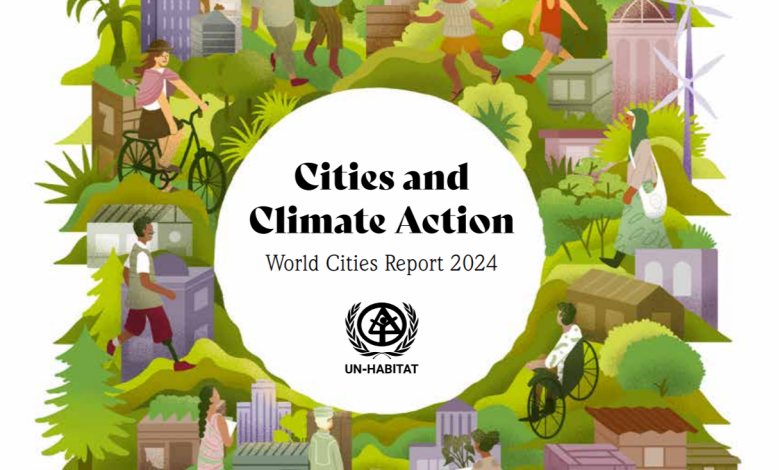
UN-Habitat has long been raising awareness about the threats cities face from climate change. The release of the Global Report on Human Settlements 2011: Cities and Climate Change was a milestone, but the organization’s work on addressing the intersection of climate change and rapid urbanization began much earlier. Over time, the urgency of the message has grown, as the worsening impacts of climate change outpace the global response. Rising sea levels, urban heatwaves, and other climate-related events are exacting significant human, economic, and environmental costs—costs that are expected to escalate further. This report highlights that nearly all urban residents will be affected, with billions experiencing hotter temperatures, flooding, and other climate-related risks.
The effects of climate change, however, are not evenly distributed. Vulnerable populations, particularly those living in informal settlements and slums, are disproportionately at risk. These areas, often located in environmentally sensitive zones and lacking protective infrastructure, suffer the most from climate-related disasters. Structural inequalities compound these challenges, leaving marginalized groups—such as women, children, people with disabilities, older individuals, migrants, minorities, and Indigenous Peoples—more exposed to risks and less likely to receive adequate support during crises. Addressing the needs of these vulnerable communities, as well as transforming slums and informal settlements, is an urgent priority.
At the same time, cities themselves play a significant role in the climate crisis. Urban areas are often criticized—justifiably so—for their carbon-intensive consumption and production patterns. However, cities are also proving that sustainable urbanization is possible. This report highlights how urban initiatives, such as electrified transport networks, energy-efficient buildings, ecosystem restoration, and recycling programs, demonstrate that cities can benefit the planet while improving the quality of life for their residents.
Local and regional governments are already leading efforts to adapt to and mitigate climate change, showcasing innovative solutions that prioritize safety, health, and livability. By embracing these pathways, cities can transform from being major contributors to the climate crisis into vital hubs of sustainable progress.
Source:
https://unhabitat.org/sites/default/files/2024/11/wcr2024_-_full_report.pdf


