
A record year for global greenhouse gas emissions breaking down the numbers
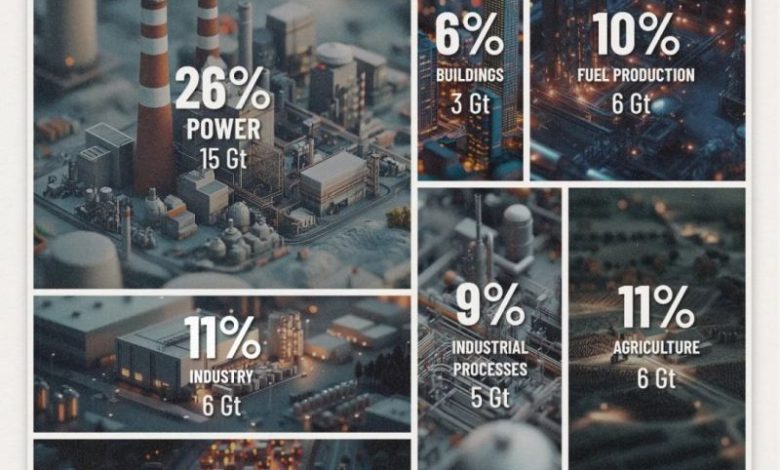
As the world grapples with the urgency of climate change, the year 2023 has delivered sobering news: global greenhouse gas (GHG) emissions reached an all-time high of 57.1 gigatonnes of carbon dioxide equivalent (GtCO₂e), representing a 1.3% increase from the previous year. These numbers, drawn from the United Nations’ 2024 Emissions Gap Report, underscore the scale of the challenge before us and highlight the critical need for accelerated action.
The Power Sector: A Stubborn Leader
At the top of the emissions chart stands the power sector, responsible for a staggering 15.1 GtCO₂e in 2023. Despite advances in renewable energy and efficiency technologies, this sector remains the single largest contributor to global emissions. The continued reliance on coal and gas-fired power plants in many regions is a key driver of these numbers, underscoring the urgent need for a just energy transition that scales up clean alternatives while addressing energy access and equity.
Transport: Racing Toward Decarbonization
Following closely behind, the transport sector contributed 9 GtCO₂e in emissions last year. While electric vehicles (EVs) and public transportation networks are making headway in reducing emissions, the sector’s heavy dependence on fossil fuels for aviation, shipping, and long-haul freight continues to pose significant challenges. Accelerating the adoption of EVs, improving fuel efficiency, and transitioning to sustainable fuels are critical steps to driving down transport emissions.
Agriculture and Industry: Hidden Giants
The agriculture and industry sectors each contributed 6.6 GtCO₂e in 2023, placing them firmly among the top emitters. Agriculture’s emissions stem largely from livestock, deforestation, and soil management practices, which highlight the need for sustainable food systems and reforestation efforts. Meanwhile, the industrial sector’s emissions reflect the carbon-intensive nature of cement, steel, and chemical production, necessitating innovations in materials science, circular economy practices, and carbon capture technologies.
Beyond the Numbers: A Call to Action
While these statistics paint a daunting picture, they also serve as a rallying cry. Each sector presents not only a challenge but also an opportunity to reimagine systems, policies, and behaviors. Achieving the necessary reductions in GHG emissions will require a multifaceted approach:
- Policy and Regulation: Governments must implement ambitious policies that incentivize clean energy, enforce emissions standards, and invest in sustainable infrastructure.
- Innovation and Investment: Advancing technologies such as green hydrogen, carbon capture, and sustainable agriculture practices is essential. Public and private investments must align to scale these solutions globally.
- Community and Consumer Action: Individuals and communities have a role to play in reducing emissions through lifestyle changes, advocacy, and support for sustainable businesses.
The Road Ahead
The record-high emissions of 2023 remind us that the path to a sustainable future is steep, but not insurmountable. As global leaders prepare for critical climate negotiations, the data from the UN’s Emissions Gap Report should serve as a wake-up call. The clock is ticking, but with bold action and collective will, we can still turn the tide and build a world that prioritizes climate resilience and equity.
source :
Temukan peta dengan kualitas terbaik untuk gambar peta indonesia lengkap dengan provinsi.


