Potential synergies and trade-offs between climate action and the SDGs
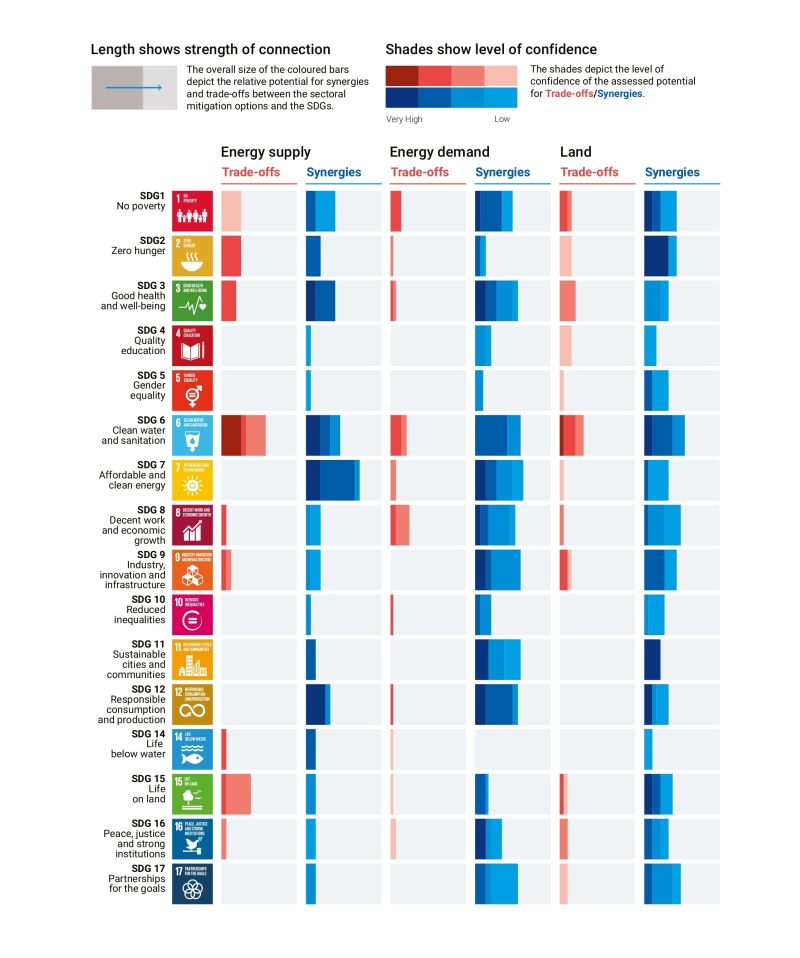
Climate change mitigation measures can have varied impacts on the Sustainable Development Goals (SDGs), as illustrated by the matrix of blue and red bars. Blue bars represent potential synergies where efforts to reduce greenhouse gas emissions simultaneously contribute to SDG targets. Red bars highlight trade-offs that arise when mitigation strategies undermine certain development objectives. The length of each bar indicates the relative strength of the relationship, while the color shade reflects the level of confidence in that assessment.
In the energy supply sector, the shift toward low-carbon technologies tends to yield positive outcomes such as improved air quality, economic diversification, and enhanced energy access. However, trade-offs may occur when large-scale infrastructure projects affect local communities, disrupt ecosystems, or require additional land and water resources. Similar complexities appear in energy demand interventions, where efficiency gains and electrification policies can support decent work opportunities but may demand significant up-front investment and workforce reskilling.
Land-based mitigation options often provide notable climate and ecosystem benefits, but they also intersect with agriculture, land rights, and biodiversity protection. Excessive reliance on bioenergy crops, for instance, can challenge food security and local livelihoods if planted at scale without proper safeguards. Balanced policymaking is essential to ensure climate efforts do not negatively affect fundamental social and environmental priorities outlined in the SDGs.
These considerations are particularly relevant for businesses, as the private sector increasingly aligns growth strategies with sustainability objectives. Assessing and addressing both synergies and trade-offs can inform risk management, long-term planning, and stakeholder engagement. Sound understanding of potential conflicts between climate goals and other development targets supports responsible investment decisions and can strengthen corporate reputation, reduce legal risks, and foster resilience in global value chains.
Strategic approaches that integrate multidimensional impact assessments, stakeholder consultations, and cross-sector collaborations can enhance the positive interactions between climate mitigation and SDG outcomes. Such approaches also minimize unintended consequences that could arise from well-intentioned but narrowly focused interventions.
By comprehensively evaluating the interconnections among climate measures and the SDGs, decision makers can guide future actions toward balanced, resilient, and inclusive pathways for sustainable development.
Source: