Countries behind the ocean’s growing trash
Upstream Crisis, Downstream Reality: Why Ocean Plastic Is a Systemic Failure
When we picture ocean plastic pollution, we often imagine vast, floating islands of garbage in the middle of the Pacific. But marine debris doesn’t originate in the open ocean it flows directly from river mouths, urban waterways, and coastal communities where terrestrial waste management systems have reached a breaking point.
To solve the ocean plastic crisis, we must look beyond surface-level cleanups and confront the structural, economic, and infrastructural breakdowns that allow thousands of tons of plastic to escape into marine ecosystems every year.
The Frontline: Where Marine Plastic Emissions Concentrate
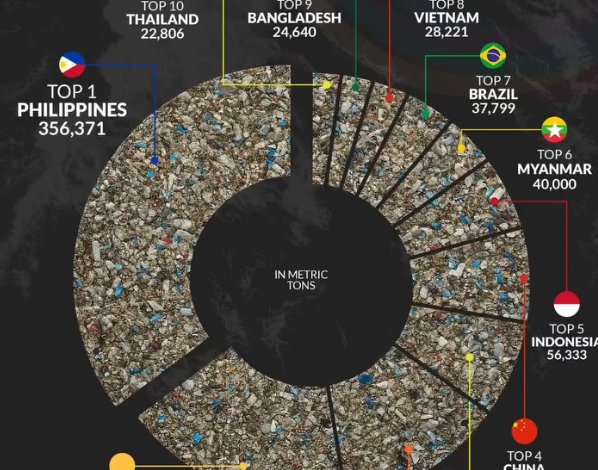
The distribution of ocean-bound plastic is strikingly unequal. Research highlights that a small number of countries—predominantly rapidly developing economies with expansive coastlines and high river density—account for the vast majority of global plastic inputs into marine environments.
                  [ ANNUAL OCEAN PLASTIC INPUT (METRIC TONS) ]

  1. Philippines  ███████████████████████████████████ 356,371 MT
  2. India        ████████████████████ 126,513 MT
  3. Malaysia     ██████████ 73,098 MT
  4. China        █████████ 70,707 MT
  5. Indonesia    ███████ 56,333 MT
  6. Myanmar      █████ 40,000 MT
  7. Brazil       ████ 38,000 MT
  8. Vietnam      ████ 28,298 MT
  9. Bangladesh   ███ 24,000 MT
 10. Thailand     ███ 22,806 MT
Beyond Rankings: The Four Systemic Drivers
Pointing fingers at specific nations misdiagnoses the problem. The concentration of marine plastic in these hotspots is driven by interconnected systemic factors:
| Driver | Mechanics & Systemic Vulnerability | Impact on Marine Leakage |
| Sachet Economics & Single-Use Density | Consumer markets heavily rely on low-cost, non-recyclable multi-layer laminates (single-serve sachets) tailored for low-income households. | Sachets have zero value for informal waste pickers and escape collection entirely. |
| Archipelagic Geography & Hydrology | Nations with thousands of islands and dense river networks (e.g., the Philippines, Indonesia) have vast coastlines relative to land area. | Short distances between waste sources and rivers dramatically shorten the path to the sea. |
| Infrastructural Lag | Waste generation driven by economic growth has far outpaced municipal collection, sorting, and landfill capacity. | Uncollected waste accumulates in open dumps or waterways, washing out during monsoon seasons. |
| Global Waste Trade | Historically, high-income nations exported plastic scrap to developing countries with limited processing capabilities. | Mismanaged imported scrap exacerbates domestic waste overflows. |
The Shift: From Downstream Skimming to Upstream Prevention
For years, global attention focused on skimming plastic off the ocean surface. While interceptors have a role to play, cleaning the ocean without fixing waste systems is like mopping the floor while the faucet is still running.
       ┌────────────────────────────────────────────────────────┐
       │                   UPSTREAM (Prevention)                │
       │  • Extended Producer Responsibility (EPR) Laws         │
       │  • Redesigning packaging for monomaterial recycling    │
       │  • Phasing out non-recyclable single-use sachets       │
       └───────────────────────────┬────────────────────────────┘
                                   │
                                   ▼
       ┌────────────────────────────────────────────────────────┐
       │                  MIDSTREAM (Infrastructure)            │
       │  • Formalizing informal sector waste pickers           │
       │  • Expanding municipal collection to 100% coverage     │
       │  • Building localized sorting & mechanical recycling   │
       └───────────────────────────┬────────────────────────────┘
                                   │
                                   ▼
       ┌────────────────────────────────────────────────────────┐
       │                 DOWNSTREAM (Interception)              │
       │  • River mouth trash booms and solar interceptors      │
       │  • Coastal and community cleanup operations            │
       └────────────────────────────────────────────────────────┘
Building the Circular Infrastructure
Stopping waste before it reaches the water requires a multi-layered policy and financial framework:
- Extended Producer Responsibility (EPR): Mandatory laws forcing consumer goods manufacturers to fund the collection, sorting, and end-of-life treatment of the packaging they put on the market.
- Standardized Monomaterials: Replacing complex multi-layer plastics with high-barrier monomaterials (like pure PE or PP) so that post-consumer packaging carries actual economic value for recyclers.
- Decentralized Municipal Waste Capture: Investing in localized material recovery facilities (MRFs) to ensure uncollected waste never enters river basins.
The fundamental question is no longer how to extract millions of tons of debris from marine gyres. It is how to design products and municipal systems so that plastic never escapes human control in the first place.
source:
https://lnkd.in/p/eN7xk6gp