
Greenwashing technical overview and mitigation framework
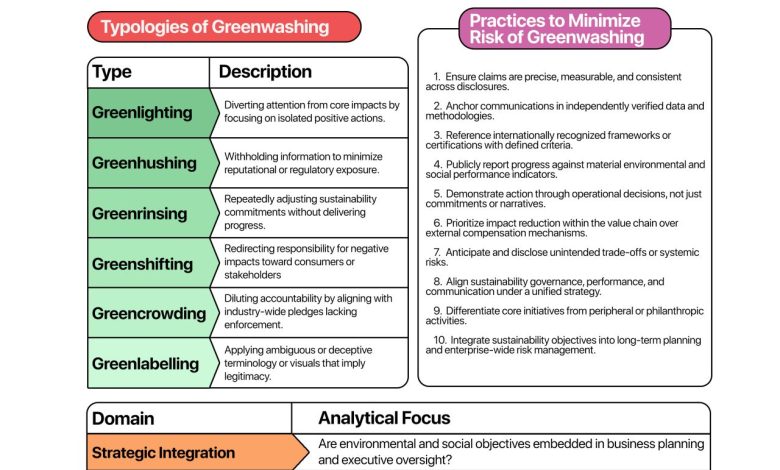
Cheat Sheet: Spotting and Stopping Greenwashing – Before It Costs You
In today’s fast-moving sustainability landscape, credibility is currency. But too often, behind glossy reports and slick branding lies a troubling reality: greenwashing the act of making something seem more environmentally or socially responsible than it truly is.
At first glance, it might look harmless. A few buzzwords here, a sustainability badge there. But make no mistake: greenwashing erodes public trust, warps market dynamics, and stalls the very progress we so urgently need.
Not All Greenwashing Looks the Same
Let’s get real: this isn’t just about lying outright. Greenwashing today comes in nuanced and strategic forms:
- Greenlighting: Highlighting one green initiative to distract from a larger, harmful footprint.
- Greenhushing: Withholding sustainability info to avoid scrutiny or responsibility.
- Greenshifting: Blaming consumers for environmental impact while avoiding institutional accountability.
These aren’t just PR slip-ups. They’re systemic misalignments between communication and performance — often rooted in unclear methodologies or unverified claims.
Why It’s Risky Business
When storytelling races ahead of actual progress, it opens the door to:
- Reputational fallout
- Legal consequences
- Financial penalties or divestment
And increasingly, regulators, investors, and consumers are watching and demanding proof.
So, How Do You Stay Grounded in Truth?
This framework provides ten actionable practices to reduce greenwashing exposure, including:
- Setting quantifiable, time-bound targets
- Seeking third-party validation
- Aligning with international frameworks (like GRI, ISSB, or SBTi)
- Disclosing trade-offs and limitations, not just the wins
Because transparency isn’t weakness it’s leadership.
Where to Look for Risk? Eight Exposure Domains:
To truly evaluate ESG integrity, dig deeper across these eight dimensions:
- Strategic Integration – Are ESG goals baked into business models, or bolted on?
- Goal Architecture – Do targets reflect material issues, or just optics?
- Narrative Integrity – Is the story consistent with what’s actually happening?
- Certifications & Labels – Are they meaningful and applied across operations?
- Disclosure Practices – Are trade-offs and challenges openly acknowledged?
- Performance Alignment – Do the numbers back the narrative?
- Accountability Mechanisms – Are there controls and grievance systems?
- Culture & Incentives – Are internal behaviors aligned with ESG values?
These aren’t just checklist items they’re pressure points where truth is tested.
Why This Matters Now
As ESG expectations rise and regulatory frameworks tighten, one thing is clear: integrity isn’t optional it’s a competitive edge. Organizations that build coherence between governance, strategy, and disclosure won’t just avoid greenwashing they’ll unlock long-term value, resilience, and stakeholder trust.
source:


