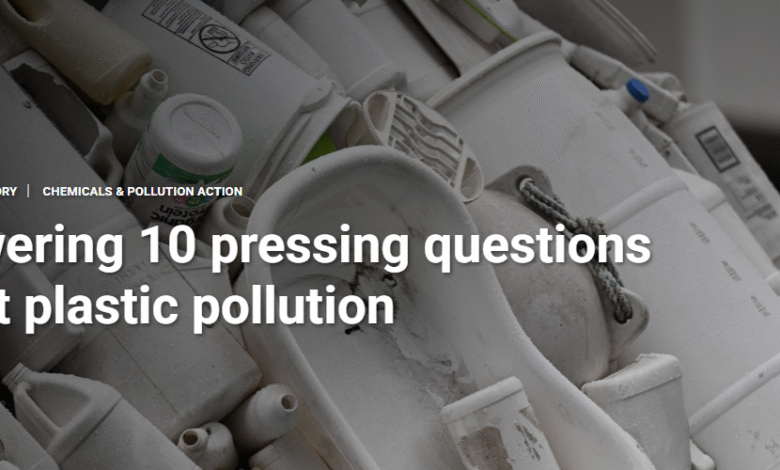
Answering 10 pressing questions about plastic pollution
The Global Plastic Crisis: A Deep Dive into a Silent Threat and the Urgent Call for Systemic Change
Last year alone, the world generated an estimated 400 million tonnes of plastic waste. This colossal deluge of bottles, containers, synthetic fabrics, PVC pipes, and countless other plastic products is not merely an inconvenience; it is the insidious tide of a plastic pollution crisis that experts warn is systematically ravaging ecosystems, exposing humanity to a cocktail of potentially harmful pollutants, and critically, exacerbating climate change.
“Plastic pollution is one of the gravest environmental threats facing the Earth, but it’s a problem we can solve,” states Elisa Tonda, Chief of the Resources and Markets Branch of the United Nations Environment Programme (UNEP). “Doing so could not only improve the well-being of people and planet but also unlock a host of economic opportunities.”
Against this grim backdrop, nations worldwide are actively negotiating a historic, international legally binding agreement to end plastic pollution. This critical global effort underscores the focus of this year’s World Environment Day, which emphasizes innovative strategies to prevent plastic waste from escaping into our environment, including robust measures against single-use plastic products and a fundamental redesign of plastic items for longevity and circularity.
Before delving into the specifics, let’s take a closer look at the pervasive nature of plastic pollution, its devastating impacts, and the transformative solutions within our grasp.
1. The Sheer Scale: How Much Plastic Is Really Out There?
The answer is unequivocally: a lot. Plastics have become an indispensable component of modern life, embedded in everything from essential medical devices to complex automotive parts. Since the 1950s, researchers conservatively estimate that humanity has produced an astounding 9.2 billion tonnes of plastic material. Of this staggering amount, a horrifying 7 billion tonnes has already become waste, a testament to our linear consumption model.
2. The Worst Offenders: Problematic Plastic Types
A primary driver of the plastic pollution crisis is the proliferation of single-use plastic products. These items, by their very design, are not intended to be circulated within the economy. Instead, they quickly overwhelm existing waste management systems, inevitably escaping into and contaminating the natural environment. Among the most common culprits are ubiquitous items such as water bottles, dispensing containers, takeaway bags, disposable cutlery, freezer bags, and packaging foam.
3. A Ubiquitous Threat: Where is Plastic Pollution Found?
The short, unsettling answer is: nearly everywhere. Plastic pollution knows no boundaries. It permeates our lakes, rivers, and oceans. It litters city streets and rural farmers’ fields. It overflows from poorly managed dumpsites. It accumulates in pristine deserts and even worms its way into the seemingly untouched sea ice of polar regions. Researchers have made alarming discoveries of plastic debris even in the most remote and extreme locations on Earth, from the dizzying heights of Mount Everest to the crushing depths of the Mariana Trench, the deepest point in our oceans.
4. The Multifaceted Problem: Why Is Plastic Pollution So Dangerous?
The severity of plastic pollution stems from three critical and interconnected reasons:
- Ecological Devastation: Plastic pollution wreaks havoc on delicate ecosystems. Studies reveal that microscopic plastic particles can significantly slow the growth of vital phytoplankton, the microscopic marine algae that form the foundational base of numerous aquatic food webs. Furthermore, marine life, including fish, frequently mistake plastic products for food, filling their stomachs with indigestible shards that ultimately lead to starvation and death.
- Human Health Risks: As plastic degrades, it breaks down into progressively smaller fragments known as microplastics and even nanoplastics. These minuscule particles can accumulate alarmingly within the human body. Microplastics have already been detected in vital organs such as livers, testicles, and shockingly, even breast milk. One particularly concerning study found that, on average, a single liter of bottled water can contain in the range of 240,000 microplastic particles. While the long-term health effects are still being feverishly researched, the sheer volume of ingestion is a profound concern.
- Climate Change Contribution: Plastic’s environmental footprint extends beyond visible pollution; it is a significant contributor to climate change throughout its entire lifecycle. The production of plastic, an intensely energy-hungry process, was estimated to be responsible for more than 3% of planet-warming greenhouse gas emissions in 2020. This figure doesn’t even account for emissions from incineration or the breakdown of plastic in the environment.
5. The Unknowns: What Do Microplastics Do to Humans?
While the alarming presence of microplastics within the human body is now an established fact, the precise impacts on human health remain an urgent area of scientific inquiry. Researchers are working tirelessly to understand the physiological consequences of ingesting and absorbing these tiny particles, recognizing the potential for widespread, systemic health issues.
6. The Recycling Myth Debunked: Why It’s Not Enough
Can recycling alone halt the plastic pollution crisis? Emphatically, no. According to a study by the Organisation for Economic Co-operation and Development (OECD), only approximately 9% of plastics are actually recycled globally. Several factors contribute to this dismal rate:
- Poor Design for Circularity: Many plastic products are simply not designed with reuse or effective recycling in mind.
- Material Limitations: Some plastics are too flimsy for multiple recycling cycles, while others can only undergo the process once or twice before becoming unusable.
- Infrastructure Deficiencies: Many countries globally lack the robust infrastructure necessary to efficiently collect, sort, and process plastic waste for recycling.
- Overwhelmed Systems: Perhaps the most significant challenge is the sheer volume of plastic production. Global plastic production doubled between 2000 and 2019, completely overwhelming the capacity of existing recycling systems.
7. The Lifecycle Approach: A Holistic Solution
To truly tackle plastic pollution, we must think big and adopt a comprehensive, systemic approach. This necessitates moving far beyond the limited scope of recycling and embracing the lifecycle approach. This means critically examining every stage of a product’s life – from its initial production and design, through its consumption phase, and finally to its disposal.
In practical terms, this translates to:
- Radical Reduction: Dramatically reducing our dependence on single-use plastic products.
- Redesign for Longevity: Innovating plastic products so they are inherently designed to last longer, be less hazardous, and easily reusable and ultimately recyclable.
- Material Alternatives: Actively seeking and implementing sustainable alternatives to plastics across a wide range of products.
- Preventing Leakage: Implementing robust systems and policies to prevent plastics from ever seeping into the environment in the first place.
8. Cost-Benefit Analysis: Is It Feasible?
While a systemic overhaul might sound daunting and expensive, the reality is quite the opposite. Governments, forward-thinking corporations, innovative non-profit organizations, and individuals worldwide are already pioneering and implementing groundbreaking solutions to end plastic pollution. Crucially, research indicates that adopting a comprehensive lifecycle approach could save the world an astonishing US$4.5 trillion in social and environmental costs through 2040.
“We need to stop thinking about solutions to plastic pollution as an expense,” asserts Elisa Tonda. “They’re investments in healthy societies and a healthy planet things that would pay dividends for generations to come.”
9. Global Response: Towards a Legally Binding Treaty
Many countries are already addressing pollution at a national level through laws designed to curtail single-use plastics and compel manufacturers to assume long-term responsibility for their products (Extended Producer Responsibility). However, given that plastic pollution is an inherently cross border problem, international cooperation is absolutely critical.
This is precisely why nations are currently negotiating a landmark global treaty to end plastic pollution. The Intergovernmental Negotiating Committee (INC), tasked with developing this crucial accord, is set to meet for the second part of its fifth session from 5 to 14 August 2025 in Geneva, Switzerland. These ongoing talks are a profound acknowledgment by world leaders of the sheer severity of the plastic pollution crisis and the urgent, undeniable need for a legally binding global agreement to effectively address it.
10. The Urgency of Now: Why Decisive Action Cannot Wait
Without immediate and decisive action, the problem of plastic pollution is destined to spiral catastrophically out of control. The Organisation for Economic Co-operation and Development (OECD) grimly forecasts that by 2060, global plastic waste will nearly triple, reaching an unimaginable one billion tonnes per year. If current trends persist, this will inevitably lead to a massive surge in plastic pollution, with nearly half of all newly generated plastic waste either landfilled, incinerated, or tragically, simply lost into the environment.
The future of our planet, its ecosystems, and the health of current and future generations hinge on our collective ability to confront this crisis head-on and transition rapidly to a truly plastic free, circular future.
source:
https://www.unep.org/news-and-stories/story/answering-10-pressing-questions-about-plastic-pollution