Climate Resilience Starts with Land Tenure: Why insecure land undermines urban adaptation
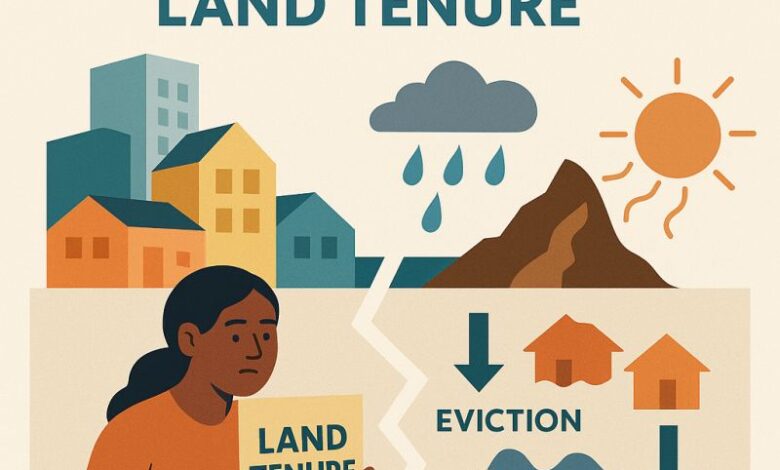
We often talk about building resilience into cities — green roofs, drainage systems, early warning tech.
But resilience doesn’t start with infrastructure. It starts with land rights.
In many cities, millions of people live in informal or undocumented settlements — often in areas most vulnerable to floods, landslides, and extreme heat.
And because they lack secure land tenure, they also lack:
🔒 Legal protection from eviction
📈 Access to public adaptation funding
📐 Eligibility for formal upgrades and infrastructure
🏥 Inclusion in disaster response plans
🌧️ So when climate risk hits — they’re last to be protected, first to be displaced.
This is the paradox of urban climate adaptation:
🏙️ We build for “resilience,” but exclude the very people who need it most.
To address this, some cities are integrating tenure-sensitive planning, where upgrading and adaptation go hand-in-hand:
✔️ Participatory mapping of informal settlements
✔️ Collective land titling
✔️ Flexible zoning that recognizes self-built housing
✔️ Climate funds tied to tenure formalization
Because resilient infrastructure on precarious land is not resilience — it’s optics.
📣 Urban climate policy must be rooted in legal, social, and historical truths.
👇 How does your city integrate land tenure into its climate strategy?
Source: