
Green carbon vs blue carbon
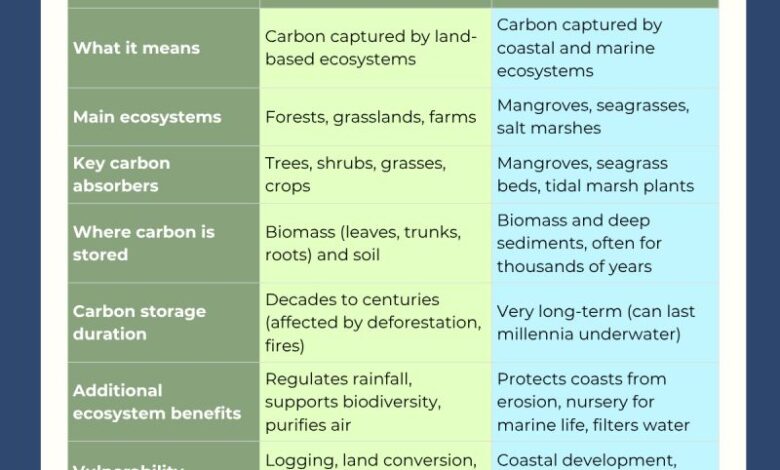
A Tale of Two Carbons: Unlocking Nature’s Climate Solutions
When we talk about fighting climate change, the conversation often turns to technology and engineering. But what if the most powerful tools are already here, woven into the fabric of our planet? Green carbon and blue carbon are two distinct but equally crucial natural allies in the battle for climate stability. Understanding their roles is key to crafting smarter, more effective strategies to protect our world.
The Land-Based Hero: Green Carbon
Green carbon is the carbon stored in the world’s terrestrial ecosystems our forests, grasslands, and agricultural soils. It’s the carbon that trees, plants, and crops pull from the atmosphere through photosynthesis, locking it away in their leaves, stems, roots, and the soil beneath. Think of a lush forest acting as a massive carbon sink, or healthy soil on a farm storing carbon and boosting crop resilience. .
Protecting and restoring these ecosystems is a non-negotiable part of our climate action plan. When we cut down a forest or degrade farmland, we’re not just losing trees; we’re releasing centuries of stored carbon back into the atmosphere. Investing in reforestation, sustainable agriculture, and conservation is a powerful way to enhance this natural process, turning our landscapes into a primary defense against rising emissions.
The Ocean’s Champion: Blue Carbon
Blue carbon is the carbon stored in coastal and marine ecosystems. This includes the rich habitats of mangroves, salt marshes, and seagrasses. These coastal areas are incredibly efficient at capturing and storing carbon, often at rates far exceeding those of terrestrial forests.
But these vital ecosystems are under threat from coastal development, pollution, and rising sea levels. When a mangrove forest is cleared or a seagrass meadow is destroyed, the carbon stored in its deep, sediment-rich soils is released, contributing to the very problem it was helping to solve. By protecting and restoring these blue carbon ecosystems, we can safeguard our coasts, support marine life, and tap into one of the planet’s most potent carbon sequestration mechanisms.
Why the Distinction Matters
You might wonder why we need to distinguish between the two. The answer lies in targeted action. A climate strategy that focuses solely on planting trees in a forest is incomplete. To truly harness nature’s power, we need a comprehensive approach that protects both our forests (green carbon) and our coastal wetlands (blue carbon). They are two sides of the same coin, each with unique benefits and challenges.
By recognizing the unique power of green and blue carbon, we can develop holistic climate solutions that not only reduce emissions but also protect biodiversity, enhance food security, and build resilient communities. The fight against climate change isn’t just about what we build; it’s about what we protect and restore.


