99% of professionals entering the sustainability field struggle with one thing: understanding the terminology
99% of professionals entering the sustainability field struggle with one thing: understanding the terminology❗🤷♂️
ESG, GHG, CSRD, CBAM, SBTi, GRI… The list can feel endless, especially when you’re starting your sustainability journey.
But here’s the truth: you don’t need to memorize every acronym. You need to understand what each one means and when to use it.
Let’s break down five essential categories of sustainability terminology.
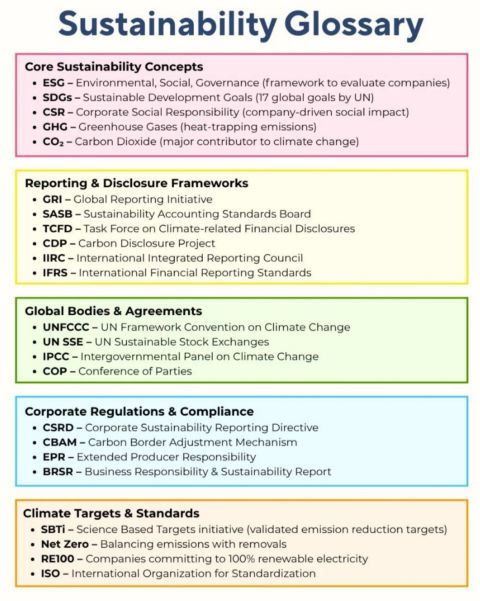
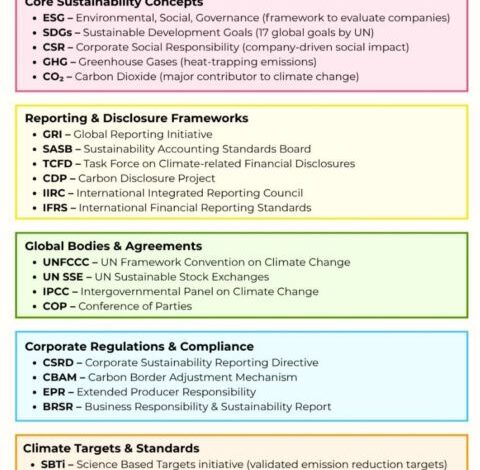
1. Core Sustainability Concepts
* ESG: Environmental, Social, and Governance
* SDGs: Sustainable Development Goals
* CSR: Corporate Social Responsibility
* GHG: Greenhouse Gases
* CO₂: Carbon Dioxide
These terms help you understand sustainability performance, environmental impacts, and corporate responsibility.
2. Reporting and Disclosure Frameworks
* GRI: Global Reporting Initiative
* SASB: Sustainability Accounting Standards Board
* TCFD: Task Force on Climate-related Financial Disclosures
* CDP: Carbon Disclosure Project
* IFRS: International Financial Reporting Standards
These frameworks and initiatives help organizations measure, communicate, and disclose sustainability-related information.
3. Global Bodies and Agreements
* UNFCCC: UN Framework Convention on Climate Change
* IPCC: Intergovernmental Panel on Climate Change
* COP: Conference of the Parties
* UN SSE: UN Sustainable Stock Exchanges initiative
They shape global climate discussions, scientific understanding, and sustainability action.
4. Corporate Regulations and Compliance
* CSRD: Corporate Sustainability Reporting Directive
* CBAM: Carbon Border Adjustment Mechanism
* EPR: Extended Producer Responsibility
* BRSR: Business Responsibility and Sustainability Report
Understanding these terms is increasingly important for sustainability professionals working in corporate reporting, supply chains, and regulatory compliance.
5. Climate Targets and Standards
* SBTi: Science Based Targets initiative
* Net Zero: Balancing residual emissions with removals after deep emissions reductions
* RE100: A corporate initiative focused on 100% renewable electricity
* ISO: International Organization for Standardization
These concepts help organizations establish climate ambitions, develop credible targets, and implement standardized approaches.
For example:
* GHG accounting helps quantify emissions.
* Life Cycle Assessment (LCA) evaluates environmental impacts across a product’s life cycle.
* SBTi helps companies set science-aligned emissions reduction targets.
* ESG reporting communicates relevant sustainability performance.
* Net-zero strategies translate climate ambition into long-term action.