Greenwashing risk indicators
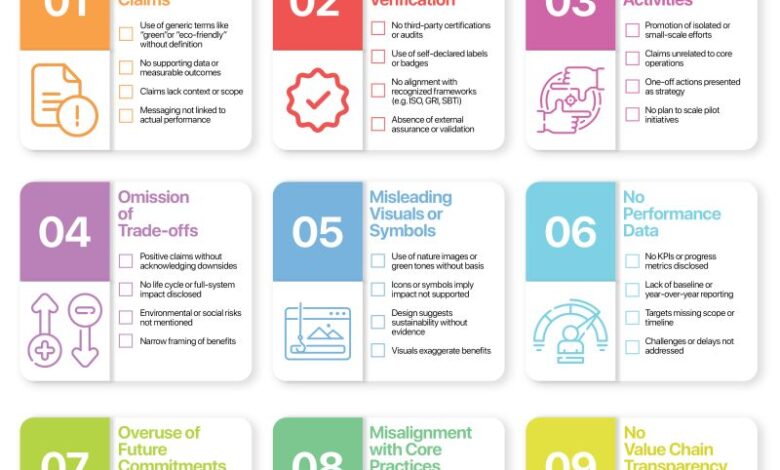
Spotting the Greenwash: A Guide to Unmasking Misleading Sustainability Claims
In today’s world, every company wants to be seen as a leader in sustainability. But as the pressure to go green intensifies, so does a growing threat: greenwashing. This is when a company spends more time and money marketing itself as environmentally friendly than actually minimizing its environmental impact. It’s a deceptive practice that can undermine genuine efforts and erode public trust.
To help leaders, practitioners, and teams cut through the noise, we’ve developed a checklist of common indicators. By learning to spot these red flags, you can avoid both reputational and legal risks and champion a more honest approach to sustainability.
9 Red Flags That Signal Greenwashing
- Vague or Unsupported Claims: Be wary of broad, undefined terms like “eco-friendly” or “all-natural.” A credible claim is specific and backed by data. For example, instead of saying a product is “sustainable,” a company should state that it’s made with “30% recycled materials” or “sourced from a certified forest.”
- Lack of Independent Verification: Trust is built on transparency. If a company’s claims aren’t supported by third-party certifications, audits, or recognized frameworks (like B Corp or Fair Trade), their credibility is weakened. Independent oversight ensures claims are accurate and reliable.
- Focus on Minor Activities: Does a company highlight a small, insignificant action while ignoring its core business’s massive environmental footprint? This is a common tactic. For instance, a major fossil fuel company promoting its single solar farm while continuing to expand its oil exploration is a classic example.
- Omission of Trade-Offs: No product or process is perfect. A company that only makes positive claims without acknowledging the limitations, risks, or unintended consequences of its actions is likely hiding something. For instance, a company might promote its recyclable packaging while ignoring the fact that the recycling infrastructure doesn’t exist to support it.
- Misleading Visuals: Pay attention to a company’s imagery. Are they using lush green tones, nature imagery, or generic sustainability icons without any real substance to back them up? These visuals are often used to create a positive, “green” feeling without delivering on the promise.
- Absence of Performance Data: Without key performance indicators (KPIs), specific targets, or transparent reporting, it’s impossible to evaluate a company’s real impact. A company with a genuine commitment to sustainability will share its progress and its setbacks with concrete numbers.
- Non-Actionable Future Commitments: Watch out for promises of change that are far in the future or lack a clear, actionable plan. A company may promise to be “carbon neutral by 2050” without providing a roadmap for how it will get there. This can be a form of strategic delay.
- Lack of Alignment with Internal Practices: A company’s sustainability message should be reflected in its internal operations. If a company preaches environmental responsibility but has poor waste management practices, a toxic work environment, or a history of human rights violations, its claims are likely insincere.
- Poor Value Chain Transparency: Credible sustainability efforts extend beyond a company’s own walls. If a business isn’t transparent about its supply chain where its materials come from, how they are produced, and the labor practices involved it’s a major red flag.
Greenwashing can happen unintentionally, but its consequences are always real. This checklist is a powerful tool to demand more from the companies we support. By using it, we can raise the bar for what it means to be truly sustainable and drive more honest and effective change.
source: