Global environmental agreements

The Architecture of Survival: 50 Years of Global Environmental Diplomacy
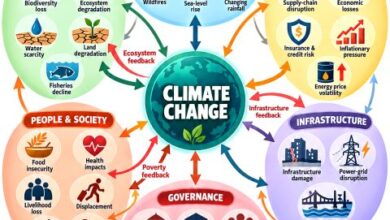
Protecting our planet is not a singular event, but a multi-generational construction project. For over five decades, the international community has moved from recognizing isolated environmental threats to understanding that climate, biodiversity, and human health are part of one inseparable system.
I. The 1970s: Establishing the Foundations
In this era, the focus was preservation. The world began to view nature not as an infinite resource, but as a shared heritage requiring legal boundaries.
- Ramsar Convention (1971): The first modern global treaty focused on a specific ecosystem—wetlands.
- CITES (1973): Addressed the survival of wild fauna and flora by regulating international trade.
- World Heritage Convention (1972): Introduced the revolutionary idea that certain natural sites belong to all of humanity.
II. The 1980s–1990s: The Scientific Awakening
This period marked a shift from conservation to crisis management. Science began to identify global threats that crossed all borders, such as the ozone hole and global warming.
- The Montreal Protocol (1987): Often cited as the most successful treaty in history, it proved that global cooperation could physically heal the planet by phasing out ozone-depleting substances.
- The Rio Earth Summit (1992): A watershed moment that birthed the UNFCCC (Climate Change) and the Convention on Biological Diversity (CBD), acknowledging that development and environment must go hand-in-hand.
III. The 2000s: Confronting the Invisible Killers
As industrialization accelerated, the focus expanded to public health and the long-term impact of synthetic chemicals on the food chain.
- Stockholm Convention (2001): Targeted “Persistent Organic Pollutants” (POPs) chemicals that don’t break down and travel long distances through air and water.
- Rotterdam Convention (2004): Promoted shared responsibility in the international trade of hazardous chemicals.
IV. The 2010s: The Era of Accountability
Global diplomacy moved from “what should we do” to “how much will we commit.”
- The Paris Agreement (2015): A historic shift toward a “bottom-up” approach where every nation sets its own targets (NDCs) to limit global warming to well below 2oC. It signaled the beginning of the end for the fossil fuel era.
V. The 2020s: Holistic Planetary Health
Today, we are in the era of Integration. We no longer treat “pollution” and “nature” as separate files.
- Kunming–Montreal Global Biodiversity Framework (2022): The “Paris Agreement for Nature,” aiming to protect 30% of the planet’s land and oceans by 2030.
- High Seas Treaty (2023): Bringing the “Wild West” of the open ocean under international law.
- Science-Policy Panel on Chemicals (2025): Closing the gap between scientific discovery and political action regarding waste and pollution.
The Verdict: From Treaties to Transformation
The evolution of these agreements reveals a clear trajectory:
- Species/Sites (1970s) ->
- Global Atmospheric Systems (1980s-90s) ->
- Human/Chemical Safety (2000s) ->
- Systemic Integration (2020s).
The Critical Gap: While our “Planetary Constitution” is now robust, the challenge has shifted from negotiation to implementation. The focus for the remainder of this decade is no longer on writing new rules, but on mobilizing the trillions of dollars in finance needed to turn these promises into measurable recovery.