Nature keeps the records
Nature Keeps the Records: Why Restoring Ecosystems Is Our Ultimate Defense
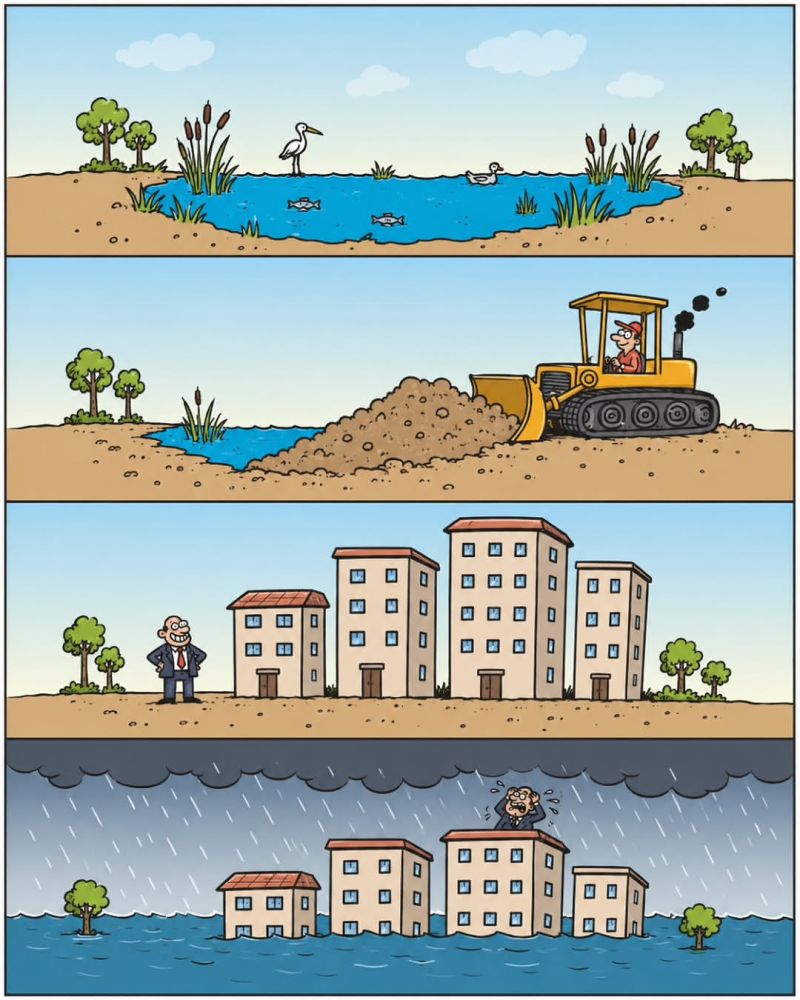
Humanity has perfected a costly habit: solving environmental crisis by replacing free, self-sustaining natural networks with expensive, engineered infrastructure.
We clear absorption zones like wetlands and forests to make way for development, only to spend billions on artificial drainage systems that struggle to manage runoff. We strip ecosystems of their natural resilience, then construct multi-billion-dollar sea walls and levees to replicate the storm protection that coastal vegetation once provided for free.
For decades, urban planners and economists have labeled untouched ecosystems as “unused land.” We only tend to recognize their true value when those ecosystems disappear, leaving behind severe financial and social voids that must be filled by artificial means.
The Physics of Natural Systems
At the core of our environmental challenges lies a fundamental misunderstanding: nature operates on immutable physical laws that ignore market trends, property boundaries, and government permits.
| Natural Law | Physical Reality | The Engineered Consequence |
| Water follows gravity | Precipitation naturally seeks the lowest, most porous pathways to settle and recharge groundwater aquifers. | Concrete paving seals the soil, forcing surface water into narrow stormwater channels that easily overflow during extreme rain events. |
| Heat follows physics | Vegetated land absorbs sunlight and cools the surrounding air via evapotranspiration. | Replacing flora with dark asphalt and concrete creates Urban Heat Islands (UHIs), elevating city temperatures by up to 1-7°F compared to surrounding rural areas. |
| Ecosystems self-regulate | Coastal mangroves, wetlands, and barrier islands naturally dissipate wave energy and absorb surge waters. | Dismantling these natural barriers leaves coastal communities vulnerable, requiring continuous expenditures on seawall maintenance and flood mitigation. |
Attempting to ignore or bypass these natural mechanics does not neutralize them—it merely defers the consequences until a major climate event forces a reckoning.
Reconciling Economy and Ecology
The defining challenge of the 21st century is moving past the false choice between economic development and environmental conservation.
Rather than building increasingly massive, capital-intensive defenses against nature, the most resilient societies are shifting toward Nature-Based Solutions (NbS) integrating natural systems directly into municipal design and regional planning:
               TRADITIONAL APPROACH                      NATURE-BASED APPROACH
          ┌────────────────────────────┐            ┌────────────────────────────┐
          │   Heavy Infrastructure     │            │    Ecosystem Integration   │
          ├────────────────────────────┤            ├────────────────────────────┤
          │ • Concrete sea walls       │     vs     │ • Mangrove restoration     │
          │ • Stormwater pipes         │            │ • Permeable urban design   │
          │ • Energy-intensive cooling  │            │ • Urban forest canopy      │
          └─────────────┬──────────────┘            └─────────────┬──────────────┘
                        │                                         │
                        ▼                                         ▼
            High Maintenance Cost,                      Self-Sustaining Protection,
           Single Point of Failure                       Co-Benefits & Value Growth
Key Benefits of Ecosystem Integration
-
Cost-Effective Resilience: Coastal mangroves and wetlands reduce wave energy by up to 66% in the first 100 meters, serving as self-repairing sea walls that grow stronger over time without maintenance contracts.
-
Aquifer Recharge & Water Quality: Natural soil filtration reduces the need for expensive water treatment facilities while ensuring deep groundwater reservoirs remain replenished.
-
Urban Cooling: Strategic urban forestry and bio-swales dramatically drop local ambient temperatures, reducing municipal energy grids’ peak cooling loads during summer heatwaves.
The Price of Forgetting
When cities dismantle the defenses nature built over millennia, the bill eventually arrives in the form of catastrophic storm damage, water scarcity, extreme heat casualties, and escalating infrastructure repair costs.
Prosperity and ecology are not competing interests; they are interdependent. True long-term economic stability requires designing with environmental laws rather than fighting against them. The future belongs to those who recognize that the most sophisticated engineering is often the system that nature already perfected.
source: