Chennai’s Walkable Revolution: How Footpaths Are Driving Climate Action and Public Health
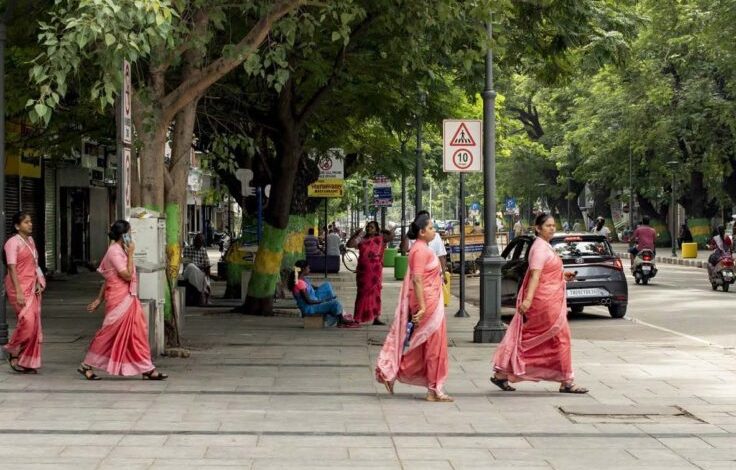
In bustling cities across lower- and middle-income countries (LMICs), where urban spaces are tightly packed and often chaotic, walking remains the most affordable and accessible form of transportation for many. However, despite its simplicity and sustainability, walking is often overlooked in urban planning. Many cities lack safe, inclusive, and well-designed sidewalks to support pedestrians, forcing them to navigate dangerous streets amidst a sea of motor vehicles. But Chennai, India, is proving that investing in walkable infrastructure can unlock enormous benefits—for the environment, for public health, and for the very fabric of urban life.
A new report developed in collaboration with the Institute for Transportation and Development Policy (ITDP) India, titled Steps to Sustainability: The Impacts of New Footpaths Evaluation on Mode Choice in Chennai, highlights a powerful, empirically-backed truth: enhancing footpaths in cities is not only a simple mobility solution but also a highly cost-effective strategy for reducing greenhouse gas emissions (GHGs), improving public health, and fostering a safer, more livable urban environment.
The Footpath Transformation: A Case Study in Chennai
Between 2013 and 2019, the city of Chennai undertook an ambitious project to reimagine its streets. Over 100 kilometers of improved footpaths were designed and built to prioritize pedestrians. The results were nothing short of transformative. By 2019, data showed that between 9% and 29% of people using these new footpaths would have otherwise traveled by private motorized vehicles. This seemingly small shift from motorized transport to walking had a profound impact on the city’s carbon footprint. According to the study, Chennai’s upgraded footpaths are preventing between 4,200 and 12,000 tonnes of CO2-equivalent emissions annually—equivalent to removing 1,000 to 2,900 cars from the road for a full year.
Beyond the climate benefits, the increased walking activity contributed to tangible improvements in public health. The reduction in vehicular emissions and the increased physical activity associated with walking are estimated to prevent around 340 deaths annually from noncommunicable diseases. These include conditions like heart disease, diabetes, and respiratory illnesses, which are exacerbated by both pollution and sedentary lifestyles.
Walking as Climate Action
Chennai’s footpath improvements showcase the power of small-scale, people-focused infrastructure projects to drive large-scale environmental change. The shift from cars to walking directly reduces the need for motorized transport, which in turn cuts GHG emissions and improves air quality. Walking infrastructure has proven to be an incredibly cost-effective means of reducing emissions—more so, in fact, than other large-scale projects like metro rail. This economic efficiency makes walkable infrastructure a win-win for both the environment and city budgets. For every INR crore spent, Chennai’s footpath investments save more tonnes of CO2 than other transportation infrastructure projects, underscoring their value as a climate action tool.
But this isn’t just about cutting emissions. It’s about rethinking how cities are built and who they are built for. By prioritizing pedestrians, cities like Chennai can reclaim streets from the dominance of cars, transforming them into spaces that are safer, cleaner, and more accessible for everyone.
Safety, Health, and Economic Benefits
Safety is another critical outcome of Chennai’s footpath transformation. According to user intercept surveys conducted as part of the research, 95% of respondents reported feeling safer on the improved streets. Safer footpaths mean fewer accidents, injuries, and fatalities, particularly in LMIC cities where pedestrian infrastructure is often underdeveloped. In Chennai’s case, the newly designed sidewalks have created spaces where walking is not only a viable option but also a desirable one.
Moreover, as more people choose to walk instead of drive, the city reaps health benefits beyond reduced pollution. Increased physical activity from walking helps combat the rising tide of noncommunicable diseases, which are a growing concern in urban areas worldwide. Footpath users in Chennai are walking more, breathing cleaner air, and avoiding the negative health impacts of vehicular emissions. In a city where public health challenges loom large, this is a powerful shift.
A Model for Global Cities
Chennai’s success in enhancing walkability is a model for other cities, especially those in LMICs, where the demand for low-cost, high-impact urban solutions is acute. Investments in walking infrastructure are not just about providing better sidewalks; they are about reimagining how cities function. By encouraging more people to walk, cities can reduce their carbon footprints, cut public health costs, improve safety, and enhance overall quality of life.
The evidence from Chennai’s footpath program is clear: the benefits of walkable infrastructure extend far beyond the immediate users. Society at large stands to gain when streets are made safer, cleaner, and more pedestrian-friendly. As urban areas around the world grapple with the twin challenges of climate change and public health crises, Chennai’s approach offers a blueprint for cities seeking solutions that are both effective and scalable.
The Path Forward: Scaling Up Walkable Infrastructure
If Chennai’s story tells us anything, it’s that the simplest solutions often hold the most profound potential. Walkable infrastructure is not just an afterthought or a secondary priority in urban planning—it is a critical component of a sustainable future. Cities that invest in sidewalks, footpaths, and pedestrian safety are investing in the health of their citizens, the resilience of their economies, and the preservation of the planet.
The success of Chennai’s footpath transformation should serve as a wake-up call to cities around the world: creating walkable urban spaces is one of the most effective tools we have in the fight against climate change. As Chennai has shown, the results are not only measurable but life-changing. Other cities would do well to follow in its footsteps—because the path to a more sustainable, healthier future might just start with a simple walk down the street.
source :