Southeast Asia’s Dual Path to Emissions Reduction: Charting a Greener Future
As climate change increasingly dominates the global agenda, Southeast Asia stands at a pivotal crossroads. Policymakers and scholars are grappling with the most effective ways to curb carbon emissions, and two key approaches often come to the forefront: implementing carbon taxes on major emitters and removing fossil fuel subsidies. While these policies have been widely studied globally, their specific impact on Southeast Asia—a region where economic growth and environmental sustainability must go hand in hand—remains underexplored. A recent climate awareness survey conducted by the ISEAS – Yusof Ishak Institute provides fresh insights into how nearly 3,000 Southeast Asian citizens view these critical policies and could help shape a path forward.
Carbon Taxes: A Growing Consensus?
Carbon taxes, designed to place a direct cost on carbon-emitting activities, are widely seen as an effective tool to incentivize companies and consumers to lower emissions. By assigning a price to pollution, they can guide economies toward more sustainable practices while generating revenue that can be reinvested in renewable energy projects or used to offset the social costs of climate change.
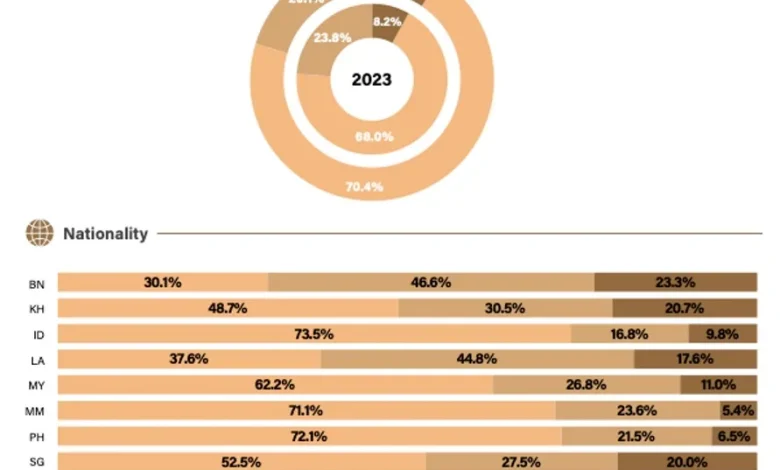
In Southeast Asia, public support for carbon taxes is on the rise. The ISEAS survey reveals that 70.4 percent of respondents across the region are in favor of national carbon taxes, up from 68 percent the previous year. Countries like Vietnam (75 percent), Indonesia (73.5 percent), and the Philippines (72.1 percent) are particularly supportive. Interestingly, older and wealthier respondents are more likely to back such policies, pointing to an awareness of both the urgency of the climate crisis and the economic mechanisms needed to address it. However, not all countries are on board. In Brunei and Laos, significant portions of the population remain unsure about the benefits of carbon taxes, highlighting the need for further public education and debate.
Despite the growing support, carbon taxes remain underutilized across Southeast Asia. Singapore is currently the only country with a direct carbon tax on companies, initially set at S$5 per tonne of CO2-equivalent in 2019. The tax will rise from S$25 in 2024 to S$45 by 2026, with the potential to reach S$80 by 2030 as Singapore strives to meet its climate commitments. Indonesia has proposed a modest tax on coal-fired power plants, priced at US$4.50 per tonne of CO2-equivalent, but its implementation has been delayed due to volatile global energy prices.
However, carbon taxes alone may not be enough. Southeast Asia is also making strides in voluntary carbon markets. Countries like Singapore, Indonesia, Malaysia, and Thailand have developed systems where companies can trade carbon permits, creating financial incentives for firms to reduce emissions further. Valued at US$2 billion in 2021, Asia’s voluntary carbon market is projected to grow to US$50 billion by 2030. Southeast Asia, with its robust trading hubs and growing commitment to climate action, is poised to capture a significant share of this emerging market.
Removing Fossil Fuel Subsidies: The Tougher Sell
While the momentum behind carbon taxes is growing, the removal of fossil fuel subsidies—a policy with equally significant climate benefits—remains politically sensitive. Fossil fuel subsidies artificially lower energy prices, encouraging overconsumption and distorting markets in favor of dirtier energy sources. Eliminating these subsidies could make renewable energy more competitive and accelerate the region’s transition to cleaner alternatives.
Yet, public support for removing fossil fuel subsidies lags behind that for carbon taxes. The ISEAS survey shows that only 46.8 percent of Southeast Asians favor removing these subsidies, with strong support concentrated in Thailand, Vietnam, and the Philippines. A notable 34.1 percent of respondents expressed uncertainty, revealing a gap in understanding about the economic and environmental benefits of subsidy reform.
Fossil fuel subsidies remain entrenched in the region. Estimates suggest that Southeast Asian governments spend an average of US$32 billion annually on such subsidies, with Indonesia ranking among the world’s top ten in subsidy spending. Even Singapore, which prides itself on having a competitive energy market, has occasionally implemented targeted energy subsidies to shield households from rising prices.
Carbon Taxes vs. Subsidy Removal: A False Choice?
In truth, Southeast Asia need not choose between carbon taxes and removing fossil fuel subsidies—both are critical components of a comprehensive climate strategy. Carbon taxes directly target large emitters and provide a clear financial signal to reduce emissions. At the same time, removing fossil fuel subsidies levels the playing field for cleaner energy sources, making them more economically viable.
The challenge lies in overcoming the political and social hurdles associated with these policies. Removing fossil fuel subsidies, for example, could lead to higher energy prices for consumers—a prospect that is particularly daunting in countries where income inequality is already a significant issue. However, evidence suggests that targeted approaches can make this transition more palatable. Malaysia’s recent decision to shift from blanket diesel subsidies to targeted subsidies for vulnerable groups is expected to save the country nearly US$1 billion annually while minimizing the impact on lower-income households.
Building Momentum for Change
The future of climate governance in Southeast Asia is at a tipping point. Both carbon taxes and fossil fuel subsidy reform have the potential to drive significant emissions reductions while steering the region toward a more sustainable, low-carbon economy. Yet, the road ahead is not without obstacles. Many countries still lack robust systems for monitoring and verifying emissions reductions, known as Measurement, Reporting, and Verification (MRV) systems, which are crucial for the success of carbon taxes and emissions trading schemes.
To unlock the full potential of these policies, Southeast Asian governments must build on the growing public support and deepen the dialogue with their citizens. Public education campaigns, targeted social programs, and clear communication about the long-term benefits of these policies will be essential in winning over skeptical or uncertain segments of the population.
Southeast Asia’s dual path toward emissions reduction is more than a choice between two policies—it is a reflection of the region’s growing leadership in the global fight against climate change. The decisions made today will not only shape the region’s economic future but also set a powerful example for other emerging economies. By acting decisively now, Southeast Asia can chart a course towards a cleaner, greener, and more resilient future for all.
source :
https://fulcrum.sg/southeast-asia-and-emission-reductions-two-paths-to-consider/