Blue, green and grey infrastructure is an important tool for helping neighbourhoods cope with extreme heat
Blue, green and grey infrastructure is an important tool for helping neighbourhoods cope with extreme heat.
⬇️
Heatwaves are increasing in frequency and intensity across the world, with cities surpassing critical temperature thresholds year after year.
The consequences are already visible across public health, energy systems, infrastructure and the daily lives of people living in dense urban areas.
Responding to this requires coordinated action from local governments, urban planners, businesses and communities.
Cooling strategies need to reach the streets, buildings and public spaces where heat exposure is concentrated.
Green infrastructure includes trees, parks, gardens and green roofs.
Blue infrastructure includes wetlands, lakes, reservoirs and rain gardens.
Grey infrastructure can be adapted through permeable paving, shaded public spaces, green walls and other built interventions.
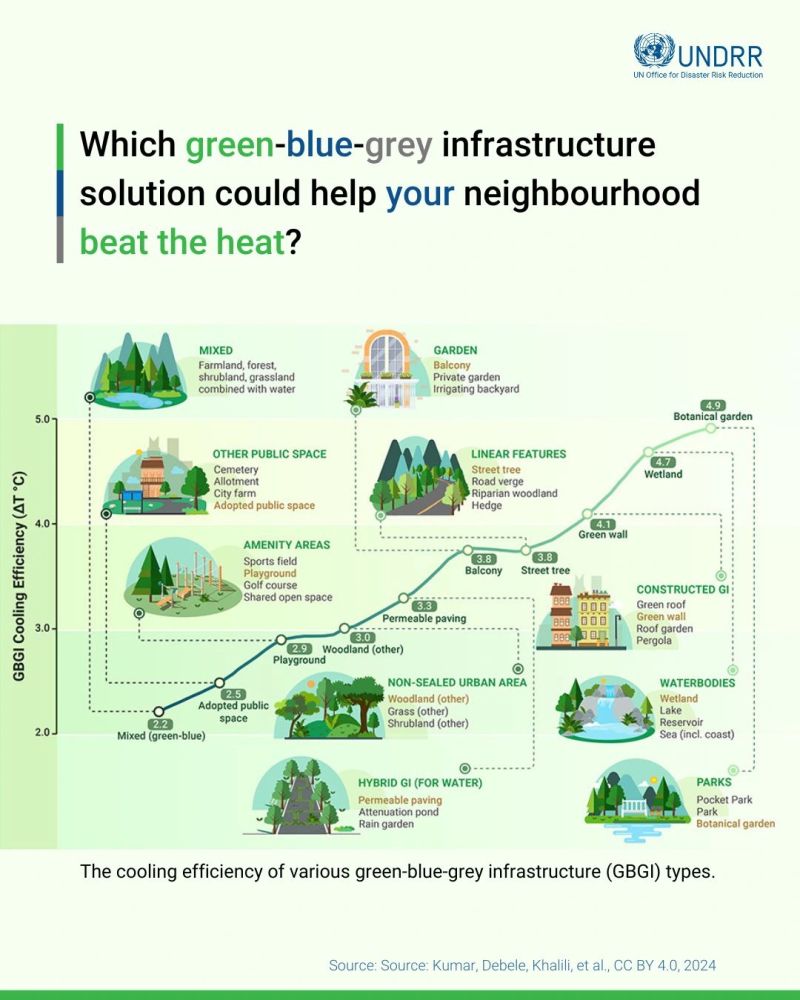
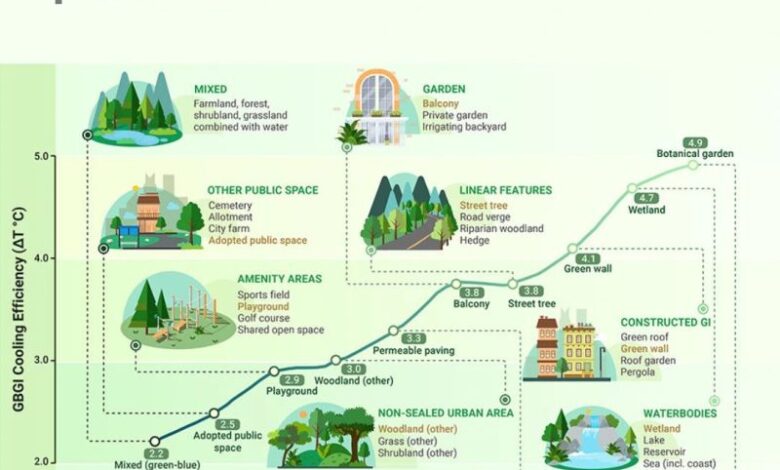
According to this UNDRR graphic, botanical gardens can provide cooling effects of up to 4.9°C, followed by wetlands at 4.7°C, green walls at 4.1°C, and street trees and balconies at around 3.8°C.
Each intervention offers different possibilities.
Botanical gardens can deliver stronger cooling but require more land. Street trees may have a smaller effect individually, yet they can be distributed across entire neighbourhoods.
Wetlands can reduce heat while also supporting flood management, biodiversity and water resilience.
The opportunity lies in combining these solutions into connected urban cooling systems that respond to the density, climate risks and needs of each community.
Source: UNDRR