Breaking Down Global Waste
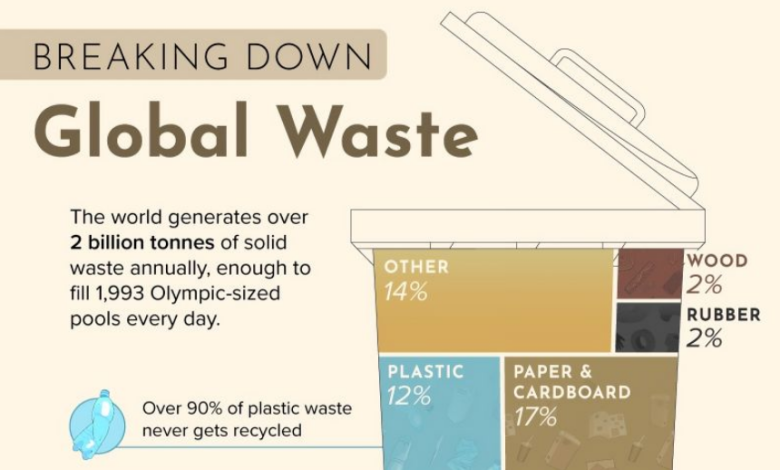
The global economy produces more than 2 billion tonnes of solid waste annually, a figure projected to rise to 3.4 billion tonnes by 2050. This increase poses material risks to supply chains, operational resilience, and compliance frameworks. Food and green waste represent the largest share—44%—underscoring inefficiencies in how resources are managed and consumed.
Plastic accounts for 12% of global waste, with more than 90% of it never recycled. Combined with rising disposal costs and stricter regulations, these figures point to growing pressure on businesses to move beyond traditional waste management practices.
Circular economy models offer a structural solution. By extending product lifecycles, recovering materials, and eliminating waste at the design stage, circular systems can reduce costs, limit exposure to raw material volatility, and support regulatory alignment.
Regions such as Asia Pacific, the Middle East, and Africa are expected to see the highest increases in waste generation. Businesses operating in or sourcing from these regions face mounting expectations to demonstrate resource efficiency and waste reduction.
Adopting circular principles across operations is becoming a standard requirement rather than a forward-looking ambition. Integrating these models supports long-term performance, reduces material dependency, and strengthens license to operate in changing markets.
Source: