How to Spot Green Washing
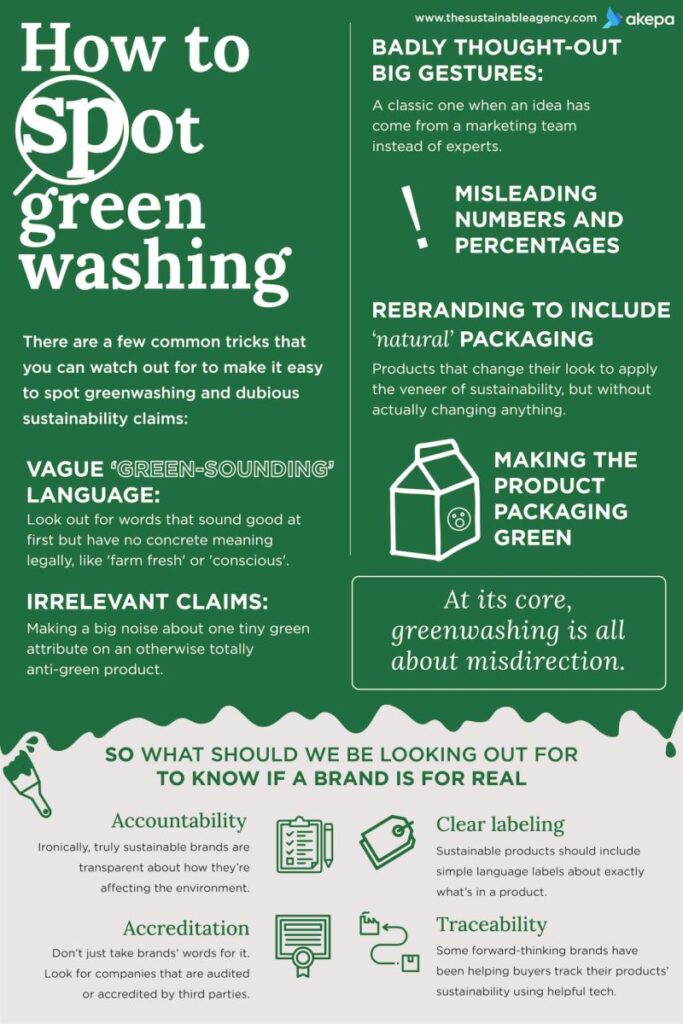
If you’ve ever questioned whether an “eco-friendly” label is genuinely sustainable or simply marketing spin, you’re asking the right question.
Greenwashing is no longer obvious. It has evolved. And as consumers, professionals, and investors, we need sharper tools to detect it.
Start with simple but powerful filters:
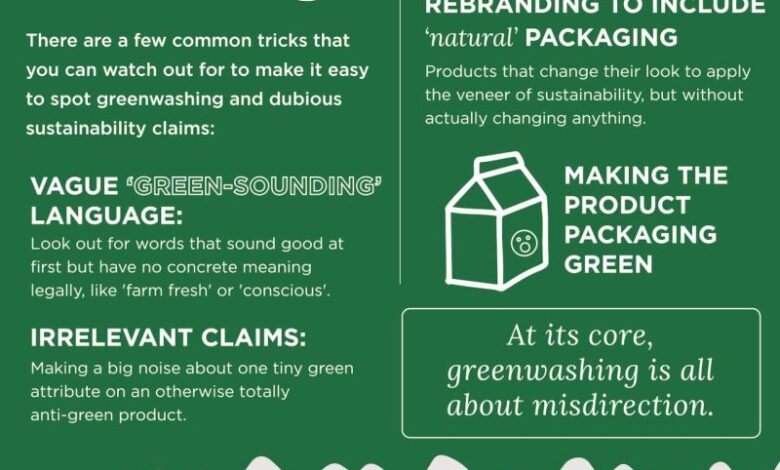
🤔 Is the claim vague?
Words like natural, green, or earth-friendly without data are red flags.
🤔 Are they spotlighting one tiny improvement?
A recyclable cap doesn’t offset a high-carbon supply chain.
🤔 Does the packaging look sustainable, but the ingredients or materials tell another story?
Aesthetic sustainability is not systemic sustainability.
But those are only the surface signals.
According to research from Planet Tracker, greenwashing often takes more structured forms:
Common Greenwashing Tactics
1️⃣ Greencrowding
Hiding within industry alliances to dilute accountability.
2️⃣ Greenlighting
Promoting a small green initiative to distract from environmentally harmful core activities.
3️⃣ Greenshifting
Shifting responsibility onto consumers (“It’s your footprint”) instead of addressing corporate emissions.
4️⃣ Greenlabelling
Using misleading or self-created labels that resemble certification schemes.
5️⃣ Greenrinsing
Announcing ambitious sustainability targets and then quietly revising or postponing them.
6️⃣ Greenhushing
Avoiding public sustainability commitments altogether to escape scrutiny.
So How Do We Push Back?
Instead of relying on branding, look for structural signals:
✅ Accountability
Do they disclose full Scope 1, 2, and 3 emissions? Are setbacks reported transparently?
✅ Accreditation
Have credible third parties audited their claims?
✅ Clear labeling
Are materials, sourcing, and lifecycle impacts explained plainly?
✅ Traceability
Can they demonstrate supply chain visibility, not just promises?
Do We Need a “Green Police”?
Regulators are tightening disclosure standards in many regions, but enforcement alone is not enough.
Real accountability comes from:
- Transparent reporting frameworks
- Independent verification
- Informed consumers
- Investors who reward integrity over marketing
Naming and shaming may create short-term pressure. But systemic transparency creates long-term change.
The deeper question is not whether a company sounds sustainable.
It’s whether their entire business model aligns with ecological limits.
What do you think is more powerful: stronger regulation, smarter consumers, or investor pressure?