Carbon Accounting
Confused between GHG Accounting emission scopes❓🤷♂️ 99% of professionals know the terms Scope 1, 2, and 3❗ But far fewer know how they fit together into a complete carbon accounting system.
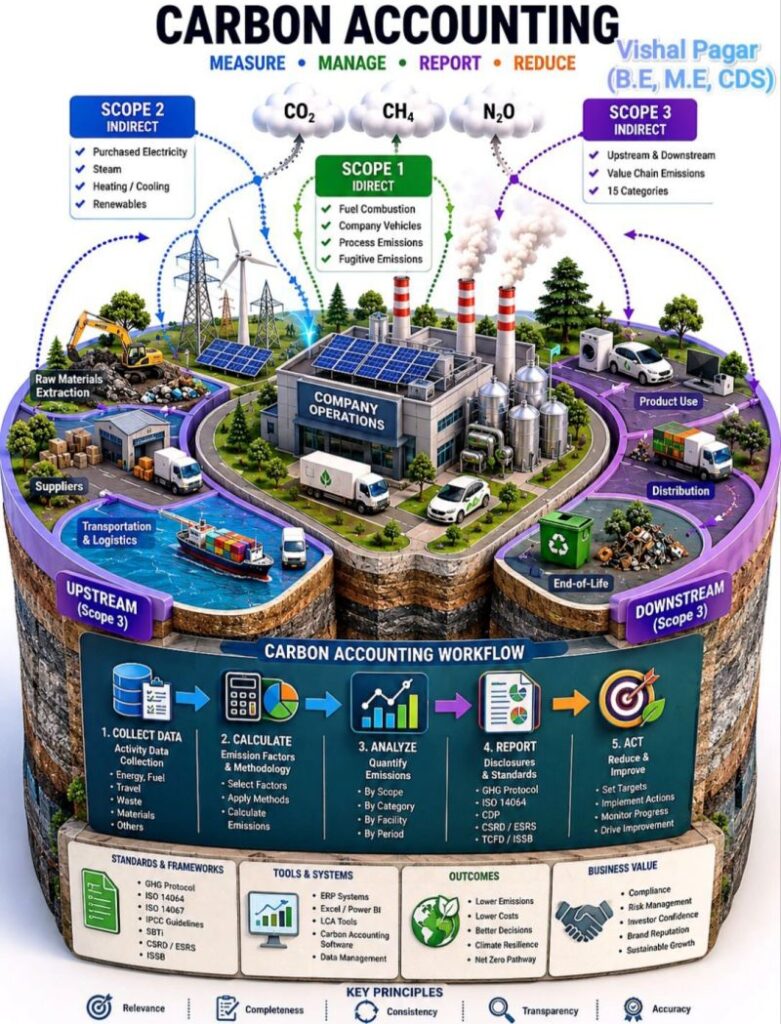
Carbon accounting is much more than calculating emissions. It is a structured process that helps organizations measure, manage, report, and reduce their environmental impact while supporting better business decisions.
A simple way to understand it:
• Scope 1 – Direct emissions
✓ Fuel combustion
✓ Company-owned vehicles
✓ Process emissions
✓ Fugitive emissions
• Scope 2 – Indirect energy emissions
✓ Purchased electricity
✓ Steam
✓ Heating and cooling
✓ Renewable electricity accounting
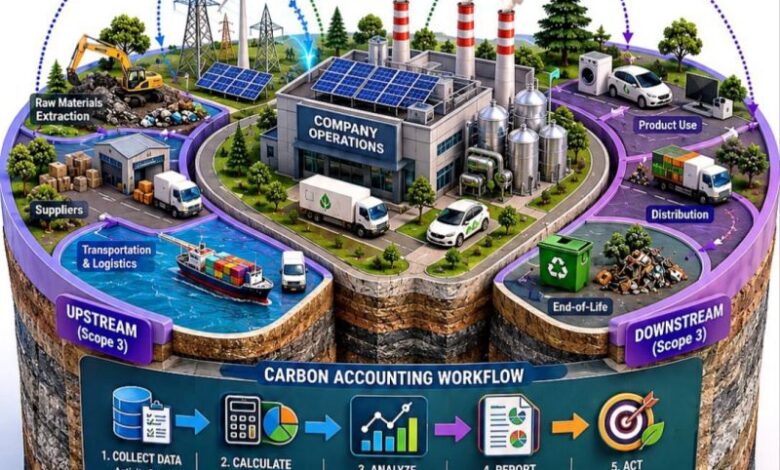
• Scope 3 – Value chain emissions
✓ Raw material extraction
✓ Supplier activities
✓ Transportation and logistics
✓ Product use
✓ End-of-life treatment
✓ All upstream and downstream activities across the value chain
But identifying emissions is only the beginning.
An effective carbon accounting workflow typically follows these steps:
• Collect reliable activity data.
• Apply appropriate emission factors and methodologies.
• Calculate emissions accurately.
• Analyze emission hotspots.
• Report in line with recognized standards such as the GHG Protocol and ISO 14064.
• Take action by implementing reduction strategies and continuously improving performance.
When done correctly, carbon accounting delivers much more than compliance.
It helps organizations:
✓ Identify cost-saving opportunities.
✓ Improve operational efficiency.
✓ Strengthen ESG reporting.
✓ Build resilience against future regulations. ✓ Increase stakeholder confidence.
✓ Create a clear pathway toward net-zero goals.
The organizations that gain the most value from carbon accounting are those that treat it as a strategic management tool—not just an annual reporting exercise.
How mature is your organization’s carbon accounting process from basic data collection to data-driven decision-making?