Climate bond vs green bond
You’ve probably heard the terms “green bonds” and “climate bonds” used interchangeably in sustainable finance. While they both fund projects with environmental benefits, there’s a crucial difference that sets them apart.
Green Bonds
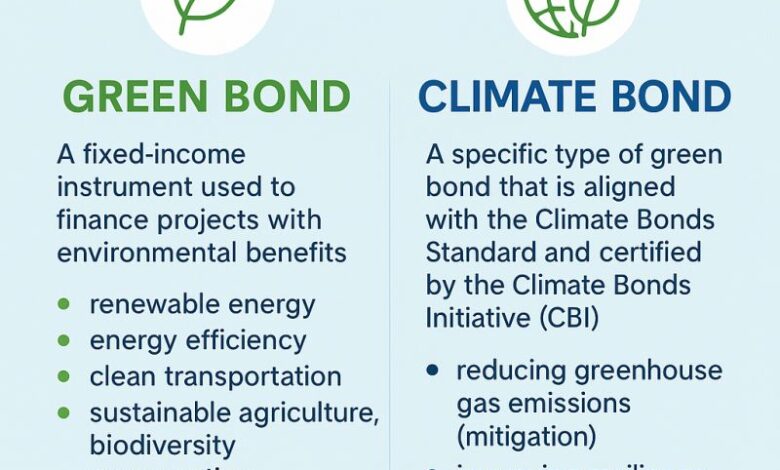
A green bond is a type of fixed-income investment specifically designed to finance projects that offer a positive environmental impact. The scope is broad, covering a wide range of initiatives such as:
- Building renewable energy plants
- Developing energy-efficient buildings
- Investing in clean transportation systems
- Supporting sustainable agriculture and forestry
Think of it as a general category for any bond that supports environmental good.
Climate Bonds
A climate bond, on the other hand, is a more specialized instrument. It’s a specific type of green bond that has been certified by the Climate Bonds Initiative (CBI), a global non-profit organization. To get this certification, the bond must meet the strict criteria of the Climate Bonds Standard.
The key distinction is focus: climate bonds are exclusively for projects that directly address climate change. These can be:
- Mitigation projects that reduce greenhouse gas emissions (e.g., wind farms, solar projects).
- Adaptation projects that help communities and ecosystems build resilience to climate impacts (e.g., seawalls, resilient infrastructure).
So, while every climate bond is a green bond, not every green bond meets the specific, climate-focused standards required to be a climate bond. The certification process gives investors confidence that their money is being used to directly combat climate change.