
Extended producer responbility
Understanding Extended Producer Responsibility (EPR): A Core Principle of Circular Economy
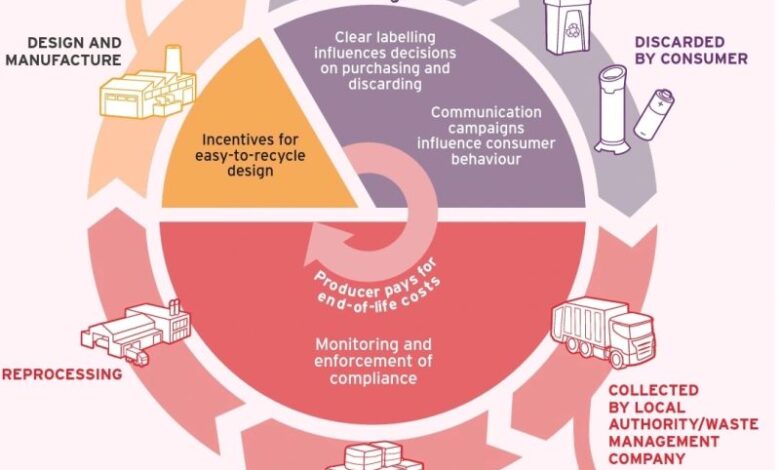
Extended Producer Responsibility (EPR) isn’t just a regulatory term; it’s a fundamental principle of the circular economy. At its core, EPR is a policy approach where producers and importers are required to bear significant responsibility for their products throughout the entire product lifecycle, from design and manufacturing all the way to post-consumer waste management. This means the responsibility doesn’t end when a product is sold; it extends to ensuring the product’s end of life is managed sustainably.
Why EPR Matters: Unlocking Key Benefits
Implementing EPR frameworks offers a range of powerful benefits that extend beyond mere environmental compliance:
- Reduces Waste Production: By placing the onus on producers, EPR incentivizes them to design products that generate less waste at every stage, from raw material extraction to manufacturing and disposal. This leads to more efficient resource use.
- Encourages Eco-Design: EPR directly pushes manufacturers to innovate and create products that are inherently more recyclable, reusable, and biodegradable. This shifts the focus from a linear “take-make-dispose” model to one that prioritizes circularity.
- Lowers Manufacturing Costs (Long-Term): While there might be initial investments, EPR can lead to long-term cost savings. By designing for recyclability and durability, companies can reduce reliance on virgin materials, optimize production processes, and minimize waste disposal fees.
- Promotes Consumer Engagement and Trust: When consumers see that brands are taking responsibility for their products’ end-of-life, it builds trust and encourages more conscious consumption. It fosters a sense of shared responsibility for environmental impact.
How EPR Works: A Collaborative Approach to Waste Management
In practice, EPR typically operates by obligating producers and importers to establish or participate in waste management systems for their products. This often involves:
- Setting up Dedicated Waste Management Teams: Companies might form internal teams or collaborate with external organizations specifically tasked with collecting, sorting, recycling, or safely disposing of their product waste.
- Financial Contributions: Producers often contribute financially to collective schemes that fund the collection, treatment, and recycling of specific product categories (e.g., electronics, packaging, batteries).
- Designing for Circularity: Crucially, EPR pushes companies to rethink product design from the outset, aiming for products that are easier to disassemble, repair, and recycle, thereby reducing their environmental footprint.
EPR is a powerful mechanism driving industries towards greater sustainability, transforming waste management from a public burden into a producer’s core responsibility. It’s about creating a system where environmental costs are internalized, fostering innovation, and ultimately, building a more sustainable future.


