Deep sea nursing, the engineering marvel of cetacean Motherhood
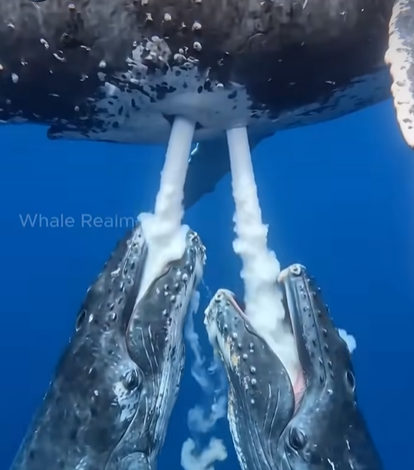
While the image of two whale calves nursing simultaneously is a popular visual on social media, the reality of how whales survive in the deep ocean is far more complex and impressive than the “no sharing” narrative suggests.
1. The Anatomy of Efficiency
Whale mothers do indeed have two mammary slits, located on the underside of their bodies. These slits are designed to be aerodynamic; the nipples stay tucked inside skin folds to reduce drag while swimming. They only emerge when a calf nudges the area to feed.
2. The Myth of “Twin Perfection”
The idea that whales have two nipples “so twins don’t fight” is a common misconception.
- Solo Travelers: In the wild, whale twins are extremely rare and usually do not survive because the energetic cost of nursing two calves is too high for a single mother.
- The Spare: Most mammals (including humans) have more than one teat even though they typically give birth to one offspring. In whales, the dual nipples are likely a biological redundancy or a result of bilateral symmetry, not a “twin-specific” design.
3. Why Whale Milk is “Heavy Cream”
The most incredible part of whale nursing isn’t the number of nipples, but the composition of the milk.
- High-Fat Content: Whale milk can contain up to 30% to 50% fat (for comparison, human milk is about 4%).
- Toothpaste Consistency: Because they are underwater, the milk must be thick almost like the consistency of soft butter or toothpaste. If it were thin like cow’s milk, it would simply dissolve in the seawater before the calf could swallow it.
- The Inversion Method: Whales don’t “suck” like human babies. Instead, the mother uses her muscles to pump or squirt the milk directly into the calf’s mouth.
4. Growth at Warp Speed
A Blue Whale calf can drink up to 100–150 gallons of this high-fat milk every single day. This allows them to put on weight at an astonishing rate sometimes gaining nearly 200 pounds (90 kg) every 24 hours.
Many viral images showing “two calves nursing at once” are actually AI-generated or edited. In reality, a single calf will nurse from one side, then eventually switch to the other, or stay on one side for the duration of a feeding session.
source: