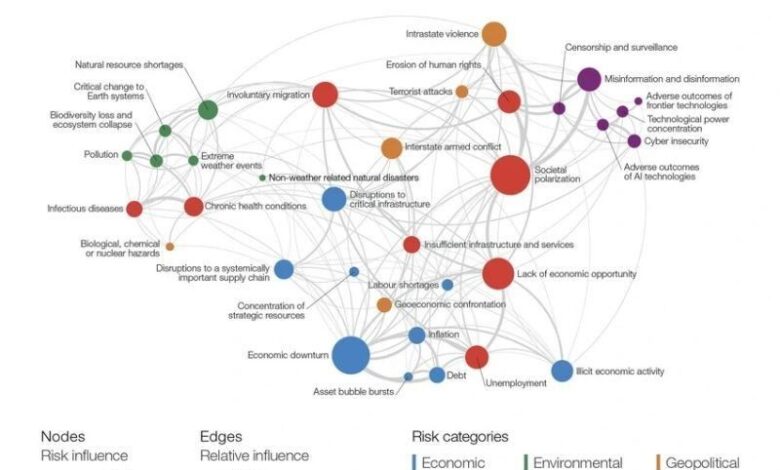
Global risk landscape: an interconnection map
Navigating the Global Risk Web: Why Interconnectedness is Key
In an increasingly complex world, understanding global risks isn’t about identifying isolated threats; it’s about recognizing them as an intricate, interconnected web. As the World Economic Forum (WEF)’s Global Risks Landscape consistently highlights, dangers rarely travel a single, predictable path. Instead, they trigger a cascade of consequences, like a series of dominoes falling across the globe.
The Global Domino Effect: Climate Change at the Forefront
Consider the most pressing challenge of our time: climate change. Its direct manifestations, such as extreme weather events, don’t just cause localized damage. Their impact ripples outwards, creating a powerful “domino effect” across various sectors:
- Resource Disruption: Extreme weather, from prolonged droughts to devastating floods, directly impacts water availability, agricultural yields, and energy infrastructure. This disruption of vital resources can trigger food shortages, energy crises, and widespread insecurity.
- Forced Migration & Displacement: As regions become uninhabitable or economically unviable due to climate impacts, populations are forced to migrate. This mass movement of people can strain resources and infrastructure in host communities, leading to new social and economic pressures.
- Economic Instability: The combination of resource scarcity, migration pressures, and infrastructure damage creates significant economic instability. Industries suffer, supply chains are disrupted, and national economies face immense burdens.
- Strained Social Cohesion: When communities grapple with resource scarcity, economic hardship, and large-scale displacement, social cohesion can erode. This can manifest as increased competition for resources, social unrest, and even conflict.
This intricate dance of cause and effect underscores why isolating risks for individual assessment is insufficient. We must perceive them as part of a larger, dynamic system.
Finding Strength in Synergy: A Holistic Approach to Resilience
The good news is that this interconnectedness also presents a powerful opportunity. By understanding these linkages, we realize that tackling one risk can significantly strengthen our resilience against others. For instance, investing in renewable energy (addressing climate change) not only reduces emissions but can also enhance energy security (reducing economic instability), create green jobs (boosting economic development), and even reduce air pollution (improving public health). Similarly, bolstering local food systems can improve food security, reduce reliance on vulnerable global supply chains, and build community resilience against climate shocks. In essence, a holistic and integrated approach to risk management is no longer optional; it’s imperative. By recognizing the intricate web of global risks, we can move beyond reactive measures and build proactive, synergistic strategies that foster greater stability and sustainability for all.
source: