How this Chinese city is improving governance of e-bikes and two wheelers
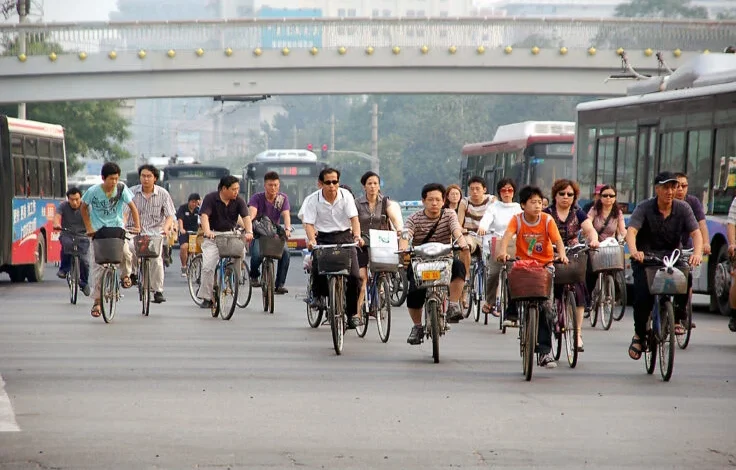
This is a fascinating look at Nanning’s transformation. To make this more than just an “informative” piece, I’ve rewritten it with a more dynamic, narrative-driven tone.
The goal here is to move from a dry report to a “success story” that feels alive emphasizing the energy of the city and the practical wisdom of its urban planning.
The Silent Thunder: How Nanning Reclaimed Its Streets for the E-Bike Era
In most global metropolises, the “city of the future” is often envisioned with sleek autonomous cars or underground hyperloops. But in Nanning, China, the future has already arrived on two wheels.
Known as the “Capital of E-Bikes,” Nanning boasts a staggering ownership rate: one electric bike for every 1.5 residents. With over 4.8 million units humming through its streets, the city hasn’t just adapted to micromobility it has mastered it.
From “Motorcycle City” to Electric Pioneer
Nanning’s love affair with two wheels isn’t new. In the 1990s, it was the “City of Motorcycles,” but that title came with a price: smog, noise, and gridlock. In 2002, the city made a bold pivot, restricting traditional motorcycles and inadvertently opening the door for the e-bike revolution.
Fast forward to today, and the e-bike isn’t just a niche alternative; it’s the lifeline of the city. Accountable for nearly 37% of all public travel, these throttle-powered machines capable of 25 km/h outnumber private cars and move the masses with a level of efficiency Western planners can only dream of.
Engineering the “Flow”
Nanning didn’t achieve this by accident. While other cities treat e-bikes as a nuisance to be shoved onto sidewalks, Nanning treated them as a priority tier of infrastructure.
- The Three-Meter Rule: The city optimized old motorcycle lanes into dedicated non-motorized paths, often exceeding three meters in width. These aren’t just painted lines; they are protected arteries separated by guardrails.
- The Bus Bypass: To prevent the dangerous “dance” between heavy buses and light bikes, Nanning designed bypasses behind bus stops, ensuring cyclists never have to play chicken with a 10-ton vehicle.
- Intersection Intelligence: At major crossings, “waiting zones” and dedicated LED-guided signals give e-bikers their own stage, significantly reducing the friction of stop-and-go traffic.
Nanning’s planners realized a simple, powerful truth: one car parking space can accommodate eight e-bikes. By reclaiming underutilized asphalt, the city has solved the “last mile” problem without building a single new parking garage.
Powering the Million: The Charging Challenge
With 4.8 million batteries comes a massive logistical hurdle: Where do they charge? Nanning’s approach is localized and pragmatic. In older, cramped neighborhoods where indoor charging is a fire risk, the city has installed outdoor “charging piles” and public depots. They’ve also embraced the “gig economy” reality by promoting battery-swapping stations. For delivery drivers, these stations turn a 4-hour charge into a 30-second swap, keeping the city’s commerce moving at lightning speed.
A Global Blueprint
Nanning proves that you don’t need a billion-dollar subway expansion to fix urban mobility. Sometimes, you just need to give the people what they’re already using and do it with dignity and design.
As cities worldwide scramble to lower carbon footprints and ease congestion, they shouldn’t just look at Nanning’s bikes; they should look at its courage to redesign the street. Nanning isn’t just a city with a lot of bikes; it’s a city that finally figured out how to let its residents breathe.