Hydrological Cycle Outlined
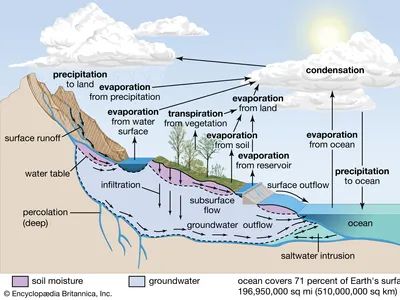
Hydrological Cycle Outlined 🌊
The hydrological cycle is a remarkable system that describes how water moves around our planet. It plays a crucial role in sustaining ecosystems, regulating climate, and providing essential resources for life. Here’s a closer look at how this cycle functions and the impact of human activities on it.
1.🌦️ The Stages of the Hydrological Cycle
………..
1.1.☔ Precipitation: The cycle begins with water entering the system as precipitation rain, snow, sleet, or hail that falls to the Earth’s surface.
1.2🌱 Infiltration and Uptake: Once on the ground, water seeps into the soil. Plant roots absorb this moisture, which is vital for their growth and survival.
1.3.💧 Groundwater Movement: Water can continue to seep through various soil layers until it reaches aquifers underground layers of water-bearing rock that store significant amounts of freshwater.
1.4. ☀️ Evaporation and Transpiration: Meanwhile, the Sun’s energy drives evaporation, transforming liquid water into vapor. This vapor rises into the atmosphere, where it cools and condenses to form clouds.
1.5. 🌧️ Return to Earth: Eventually, this condensed water returns to the surface as precipitation, completing the cycle.
2.🚶♂️ Human Impacts on the Hydrological Cycle
…………..
While the hydrological cycle is a natural process, human activities significantly affect its balance:
2.1.🚰 Depletion of Aquifers: Over-extraction of groundwater for agriculture and urban use is leading to aquifer depletion, threatening long-term water availability.
2.2. 🏞️ Damming of Rivers: Building dams alters natural water flow, which can disrupt aquatic ecosystems and harm fish populations.
2.3. 🌲 Deforestation: Removing trees can lead to increased flooding and soil erosion, as vegetation plays a critical role in absorbing rainfall.
2.4.🌡️ Climate Change: Global warming is shifting precipitation patterns and altering water distribution across regions, leading to droughts in some areas and flooding in others.
2.5. 🏙️ Land Use Changes: Urbanization and agricultural expansion can modify natural water flow, impacting local hydrology and increasing runoff.
🌍 Conclusion
…………
Understanding the hydrological cycle is essential for managing our water resources sustainably. As we face increasing challenges from climate change and human activity, it is crucial to adopt practices that protect this vital system. By promoting conservation efforts and sustainable land use practices, we can help ensure that future generations have access to clean water and healthy ecosystems.
Let’s work together to safeguard our planet’s precious water resources!
Source: