
Implementing nature based solutions a thoughtful, place specific approach
Nature-Based Solutions (NbS) hold immense potential to address climate, biodiversity, and societal challenges, but here’s a critical truth: there’s no one-size-fits-all solution. Each place, ecosystem, and community has its own unique characteristics, requiring a tailored, thoughtful approach.
At its heart, implementing NbS is a transdisciplinary journey—one that brings together stakeholders, builds on a deep understanding of systems, and prioritizes the enhancement of ecosystem services. So, how do we move from concept to meaningful action?
Here are three critical steps to guide a successful and sustainable NbS implementation:
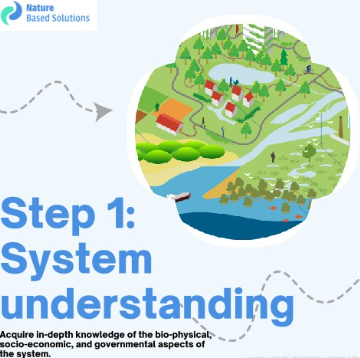
Step 1: Understand the System
Before planting a tree, restoring wetlands, or rewilding landscapes, it’s essential to pause and listen to the system. This step requires:
- Diving deep into the bio-physical environment: What ecosystems exist, and how do they function?
- Examining socio-economic dynamics: How do people interact with nature? What are their needs and vulnerabilities?
- Understanding the governance framework: Who are the key decision-makers? What policies enable or hinder change?
Why it matters: True solutions are rooted in understanding the complexity of place and people. A degraded mangrove forest, for example, might need community stewardship alongside restoration—not just replanting.
Step 2: Link Values to Your System
Every ecosystem provides services clean water, carbon storage, soil fertility, or cultural significance—that are often underappreciated or invisible. In this step, the goal is to:
- Identify key ecosystem functions: What does the system currently provide, and what could it deliver if restored or improved?
- Recognize value: Quantify these functions in terms of environmental, economic, and societal benefits.
- Connect with stakeholders: How do people value these services? For farmers, soil health might translate to food security; for urban planners, green spaces mean cooler cities.
Why it matters: By linking ecosystem services to real-world values, stakeholders are more likely to see, support, and protect the solution.
Step 3: Develop the Solution
With knowledge and values in place, it’s time to co-create a solution that fits the context. This involves:
- Designing the intervention: What actions are needed? For example, natural riverbank restoration instead of concrete barriers.
- Delivering the project: Ensure inclusive participation and equitable benefits during execution.
- Monitoring and adapting: Nature evolves, and so must our solutions. Regular assessment ensures success and longevity.
- Planning for maintenance: NbS require care. Empowering local communities to steward the solution is key to lasting impact.
Why it matters: Implementation isn’t just about starting strong it’s about building resilience over time.
Moving Beyond the Blueprint
Nature-Based Solutions are not static projects; they are living, breathing processes. They require us to engage, observe, and adapt alongside nature and local communities.
By following these three steps understanding the system, linking values, and developing thoughtful solutions we unlock a future where ecosystems thrive, people prosper, and resilience becomes second nature.
The message is clear: listen to the land, value its gifts, and work with it not against it. Nature always knows the way forward; it’s up to us to join the journey.
source :


